A telegram changed the course of literature
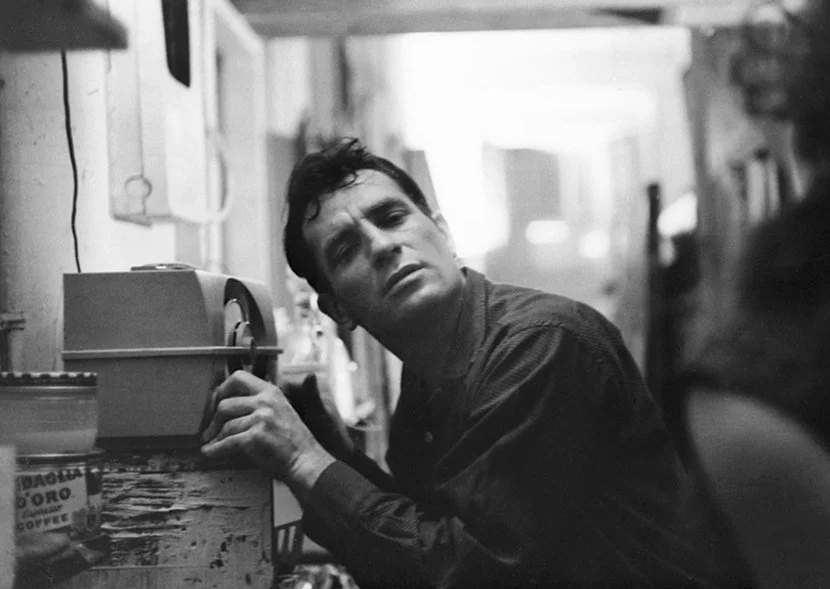
Did a telegram sent in 1942 by an Ivy League college football coach change the course of 20th century American literature? Did it save the life of Catholic author Jack Kerouac? The question has an obscure tie to a well-known event: the sinking of the SS Dorchester by German U-Boats.
Coach Lou “Lou Little” Piccirilli was born in Boston in 1891. After his birth, his father changed the family name, translating it to “Little.” Lou was a collegiate All-American, playing college football at the University of Pennsylvania. After coaching at Georgetown for six seasons, he became the head coach at Columbia University in 1930, where he stayed through 1956.
During the Second World War, and especially in 1942, the realities of the war—gas rationing, transportation issues, and the enlistment of many student athletes in the armed services—caused many colleges to drop their football programs, but not Columbia University, which was able to continue throughout the war years.
The sad tale of the sinking of the merchant marine vessel Dorchester, a significant event in wartime maritime history, has been told in several books, and was immortalized by the United States Postal Service’s issuance of a three-cent stamp in 1948 featuring the loss of the ship’s four chaplains.
Lesser known is that on the voyage immediately preceding the sinking of the Dorchester, the ship’s crew included a twenty-year-old college dropout named Jack Kerouac, future author of the groundbreaking novel, On the Road, the centerpiece of so-called Beat Generation literature—that cadre of artists that included Allen Ginberg, William S. Burroughs, and Kerouac, that flourished in the 1950s.
Kerouac, a Lowell, Massachusetts native, had enrolled at Columbia on a football scholarship in 1940. Playing on the freshman team in his first season he suffered a broken leg, became despondent, and did not return to school in 1941. Instead, Kerouac wanted to serve his country, and after failing a test to train as a Navy pilot, he became a merchant marine. It was a noble choice. As President Franklin Roosevelt opined, “[Mariners] have written one of its most brilliant chapters. They have delivered the goods when and where needed in every theater of operations and across every ocean in the biggest, most difficult and dangerous job ever undertaken. As time goes on, there will be greater public understanding of our merchant's fleet record during this war [World War II].”
The summer of 1942 found Kerouac working as a scullion on the Dorchester sailing across the Atlantic to England with wartime supplies destined for the allied troops, returning to New York in early October.
During his free time on board, he began drafting a novel, The Sea is My Brother, a 158-page handwritten manuscript, his first novel, though it was not published during his lifetime.
After a brief shore leave, he intended to continue as a merchant marine and had written in September to his childhood friend Sebastian Sampas, “I expect you will join me and enter the Merchant Marine also.” However, when he arrived home, he found a telegram from Coach Little offering to arrange his return to Columbia and to the football team.
He accepted the coach’s offer and returned to campus a few days before the fourth game of the season, the October 17th home game versus Army.
“Back I went,” he wrote in Background, “finding myself in a Baker Field scrimmage no less than 48 hours after debarking the SS Dorchester. That Saturday, I played a few minutes in the Army game.”
Four months later the Dorchester was sunk off the coast of Iceland, suffering the loss of 674 souls, including the four chaplains.
Had Kerouac not returned to Columbia, might he have signed on again with the Dorchester, or any of the 1,154 merchant marine ships sunk during the war?
His friend, Sebastian Sampas joined the army was killed at Anzio in 1944.
One is left to speculate if Coach Little’s telegram saved Kerouac’s life—though it’s more certain the missive changed the course of 20th century American literature because, though Kerouac dropped out of school again, he continued to hang around the Columbia campus where he met the likes of Ginsberg and Burroughs, and the rest is, as they say, history.

James K. Hanna is a historian, essayist, and the author of The Remarkable Life of Bishop Bonaventure Broderick: Exile, Redemption, and a Gas Station (Serif Press, 2022).