The Difficulty of Silence
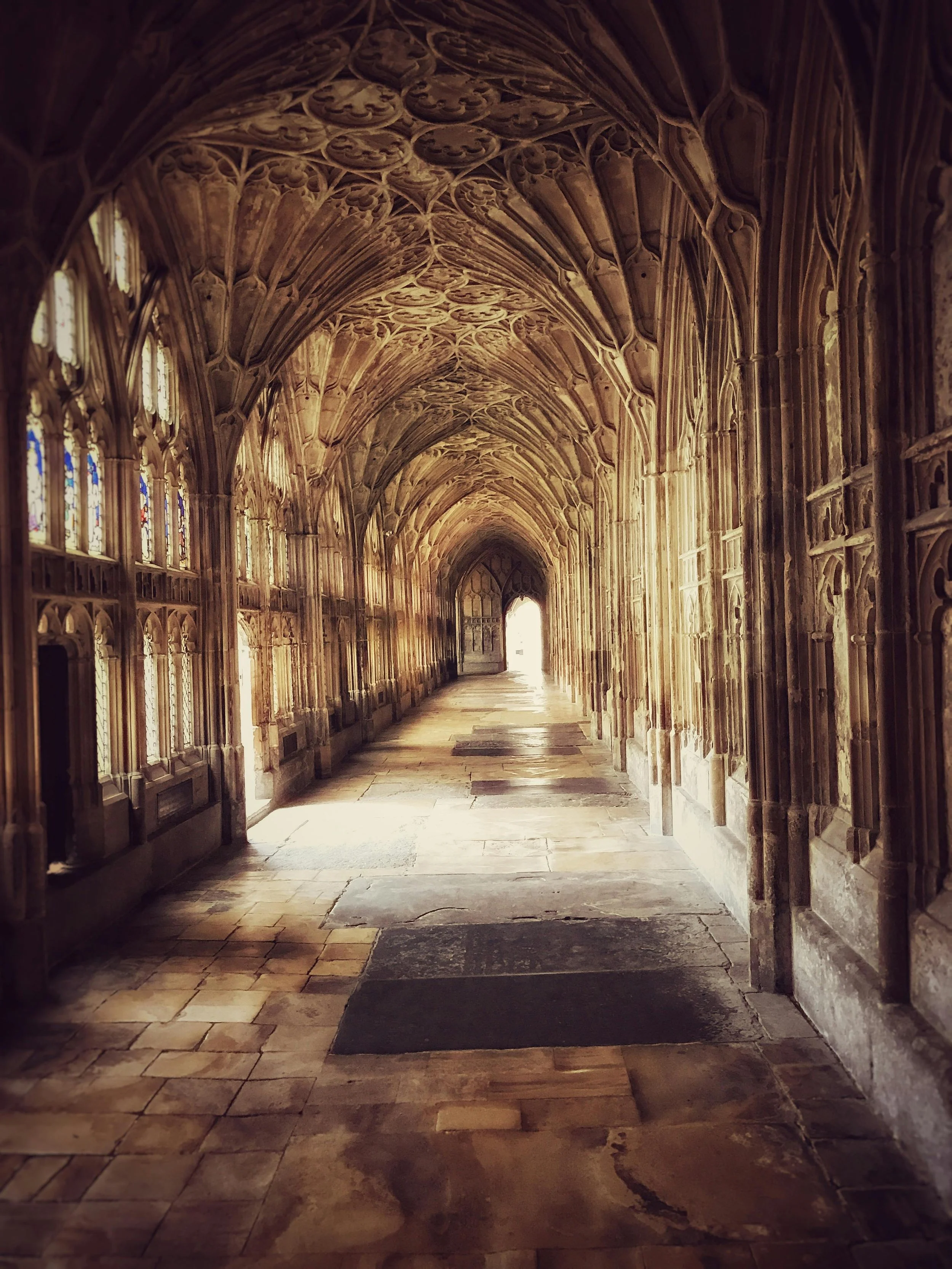
Photo by Pixabay: https://www.pexels.com/photo/brown-concrete-hallway-415585/
You do not walk into an empty church the way you walk into an empty room. You arrive differently — slower, more deliberate, your foot testing the floor before it commits to weight. Something in the body knows before the mind does that the space makes a claim on you, that the ordinary rules of movement and sound have been suspended, that you are now responsible for yourself in a way you were not on the street outside. The door closes behind you. The sound it makes is enormous. You stand still and wait for the silence to settle back around you, the way you wait for water to still after you have stepped into it.
This is not reverence, exactly. Or not only reverence. It is something closer to fear than we would like to admit.

The question worth asking is what, precisely, we are afraid of. There are two answers, and they are different fears.
The first: we are afraid of disturbing something. Of breaking a truce that the silence has established with the space, some equilibrium of stillness that our presence violates. We walk carefully because carelessness would be a kind of violence — against the silence, against whatever the silence is holding, against the memory of everyone who was quiet here before us.
The second: we are afraid of being noticed. In a full church, we are anonymous. One body among two hundred, our private disorder absorbed into the collective, our inattention and doubt and wandering mind covered by the presence of all those other minds wandering in the same direction. The liturgy moves and we move with it and no one, including whatever is in the room, can see us individually. But the empty church strips that cover away. We are singular. We are specific. We are exactly where we are, and the silence knows it.
Both fears are true. The second is the more interesting one.
The Catholic church multiplies the witnesses. You are not alone with silence — you are alone with the Virgin, with the stations of the cross, with the crucified Christ whose expression you have never had to meet directly because there were always other faces in the room. With the plaster saints in their niches, each with a name and a history and a face turned toward the nave. The iconography makes the divine proximate and multiple and particular. In a full church this is consoling: you are observed, yes, but so is everyone else, and the observation is general, distributed, diffused across two hundred bodies all equally under the gaze. In the empty church the gaze narrows. You are the only moving thing in the room. Every face is turned toward you specifically. The silence is populated, and its population is watching.
This is the specific disquiet of the Catholic empty church: not the absence of God but the presence of too many intermediaries, each one now attending only to you. In a crowded Mass, the images are company. In the empty nave, they become an audience. You move carefully because you are outnumbered. You lower your voice, even alone, because to speak at full volume would be to address them all directly, and you are not sure you have anything to say that could bear that scrutiny.
The silence in a Gothic nave is also a physical fact. Stone and gilt and painted plaster are dense, hard, highly reflective surfaces. Sound travels far in a large stone church. Your footstep moves up the nave, bounces off the vault, returns to you from above — softened, triangulated, having touched every surface in the space, having passed through all that populated air. The echo arrives back at you having been, in some small way, processed by the room. The silence that follows is not empty. It is full of the residue of what the stone has heard.

The Shaker meeting house in New Hampshire, or in Kentucky, or in Maine, contains none of this. The room has been pared of every mediating image because the theology requires it: God needs no representation, the Spirit moves without icon, beauty is what is made well, not what is made ornate. The walls are white. The windows are clear glass. The floors are wide pine boards, fitted with the precision of people who believed that the quality of a joint was a form of prayer. The benches are plain wood, made by hands that understood the making as devotion.
There is no Virgin to offend. There is no Christ to wake. There are no saints in their niches, no painted gaze, no accumulated witnesses. And yet the Shaker meeting house is not less demanding than the Catholic nave. It is more demanding, in the way that a single clear note is more demanding than a chord — because there is nowhere for the sound to scatter, nowhere for the attention to deflect, no intermediary between you and whatever the room contains.
The hands that made the furniture are in the furniture. You can feel them in the fit of the joints, in the decision to make the back of the bench as carefully as the front because God sees all sides. The room is full of that intention, concentrated into the wood, into the plain light coming through plain glass, into the silence that the Quakers and the Shakers both understood as the primary language — the one that precedes all the others, the one in which the Spirit most naturally moves.
In the Shaker house, the echo does not travel far before it returns to you. The room is smaller, the surfaces softer, the vault lower or absent. The sound you make comes back close and clean, less traveled, having touched fewer things on its way home. It arrives nearer to the chest. There is less distance between the sound and whatever hears it. In the Catholic nave the echo returns from above, from a height that implies some upward distance between you and the attention of the room. In the Shaker house the echo returns at eye level. The attention is immediate. The silence is not above you. It is beside you, at arm's length, waiting.
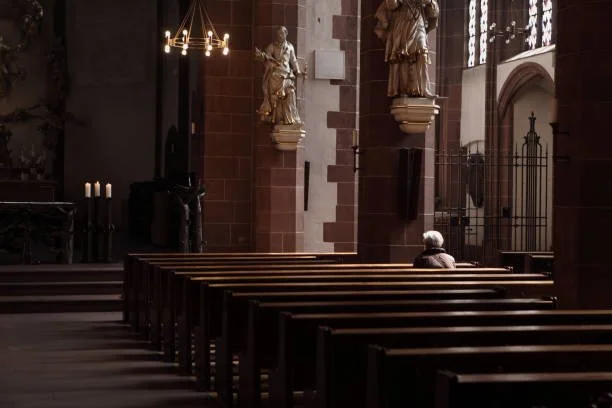
We become conscious of our breathing. This is the body's most reliable report that something unusual is happening: the automatic has become deliberate, the unconscious has been noticed, the thing we never think about has become the loudest sound in the room. In an empty church — any empty church, every empty church — our breath echoes.
To hear your own breath echo is to understand, briefly and bodily, what the mystics mean by presence. Not the presence of a doctrine or a tradition or a named divine being, but the presence of attention itself — the sense that the space is listening, that the silence is not an absence of sound but a quality of awareness, that to enter it is to enter a condition that precedes and exceeds any particular theology. The Shakers left the room unadorned to make this presence undeniable. The Catholic layered the room to make this presence beautiful and specific and approachable. Both were trying to close the same distance. Both understood that the empty room, in the end, does the work no liturgy can fully do.
The silence that remains when the last person leaves a church is not the silence of an ordinary empty room. It is accumulated — the residue of everything that was ever said or sung or wept or whispered in that space, compressed into the stillness, held in the stone or the wood or the white plaster walls. You walk into it and your body knows it has entered something that has been prepared, that the silence here has a different weight than the silence of an empty office or an empty street. It has been used. It has been used for the hardest thing human beings attempt, which is to speak honestly into the possibility that something is listening. The empty church holds that attempt. The silence is not what is left when the people go. It is what was there before they came, and what remains when they have said everything they know how to say.
We walk carefully. We lower our voices. We are afraid of being noticed, and afraid of disturbing something, and both fears are right. In the empty church, the silence is not a lack. It is one of the most difficult sentences in any language — present in every tradition, translatable into none, demanding to be heard by a body that has forgotten how to be still.
We stand in the door and we listen. Our breath echoes. We wait.