
Friday Links
A Christian family vs. the Norwegian liberal state in tense drama Fjord
The Church and the Fiction Writer on the Ladder of Divine Ascent
Clay Tablets
The return of the great American exile novel
From fire by fire
A Christian family vs. the Norwegian liberal state in tense drama Fjord
James and Thomas discuss the new film Fjord, a quiet but extremely tense drama based on the real-life case of a conservative Christian family from Romania who moved to Norway and had their children taken away by the Norwegian Child Protective Services, ostensibly for using light spanking to discipline their children, but seemingly motivated by anti-religious bigotry. Fjord won the highest prize at the Cannes Film Festival this year, which angered many liberal critics because of the film’s sympathies with the Christian parents against the repressive liberal bureaucratic state.
The Church and the Fiction Writer on the Ladder of Divine Ascent
Phil Klay is joined by Kathleen Kilcup, author of Between the Light and Me: A Memoir of Beauty and Violence, to discuss Flannery O'Connor's The Church and the Fiction Writer and the 12th century icon The Ladder of Divine Ascent
Clay Tablets
A new poem from Andrew Frisardi. Here’s the first stanza. Read the rest at The Sonneteer:
The sediment that washed up on the shore
Of rivers sprung in Paradise became
Our bodies. Ruddy, sodden, sticky, raw,
It is insoluble as man’s first name.
The return of the great American exile novel
Valerie Stivers reviews The Comforts of Exile by Trevor Cribben Merrill:
Colin struggles as a writer because of his attraction to big ideas and his inability, as he puts it, to “be specific.” At university, he and Julia both studied creative writing with a famous writer, McClatchy, who provides Colin with entree to the literary scene in Paris, and who will play a role in the denouement. Once in Paris, Colin tries to interest himself in specifics, but begins to think that he has “a mental illness that prevents you from becoming interested in concrete details.” On his search for a cure, he comes across The Forlorn Demon by the poet and literary critic Allen Tate, which argues that contemporary thought is “disdainful of the material world” and that the only authentic experience can come from feeling.
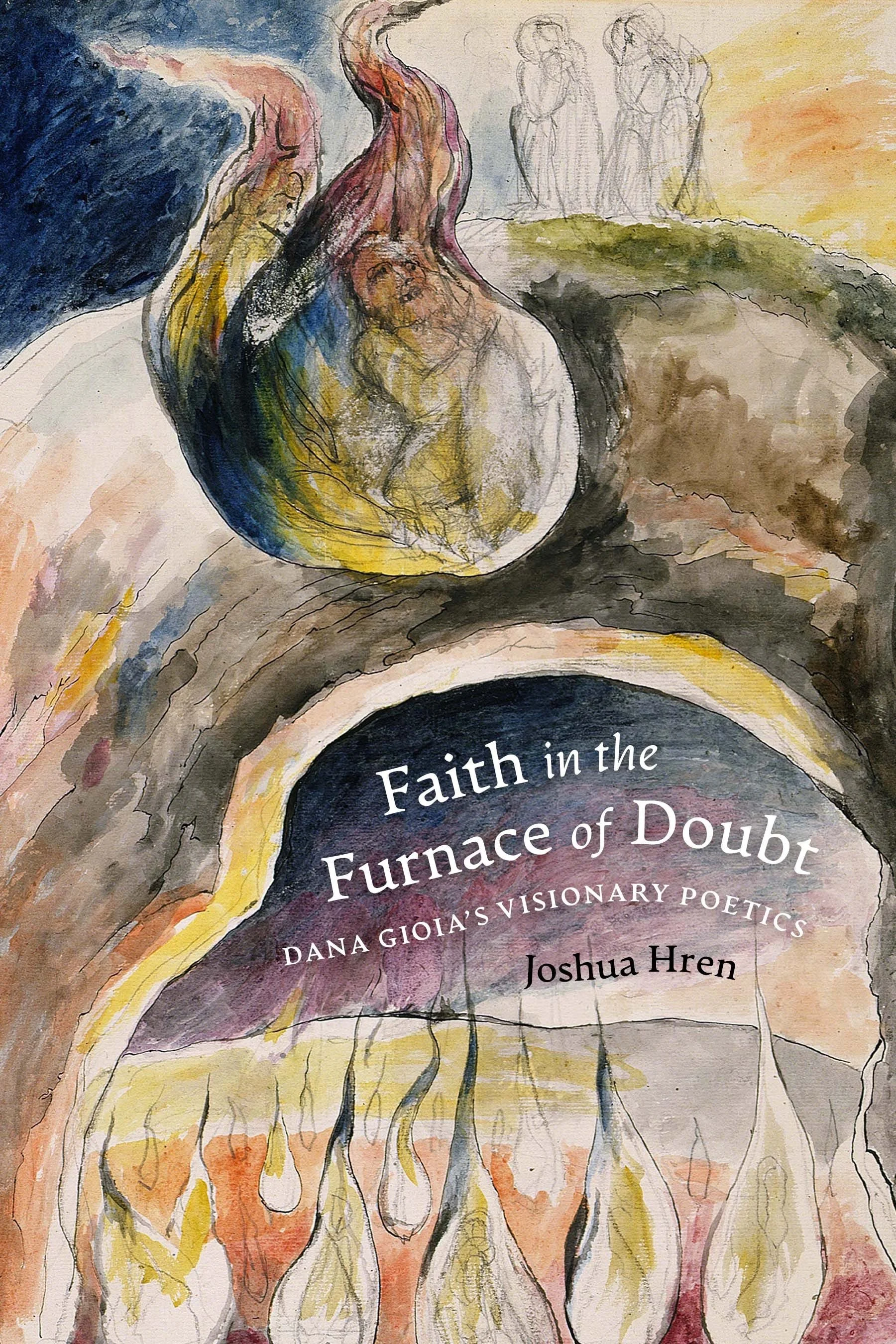
From fire by fire
Morgan Vannell reviews Faith in the Furnace of Doubt: Dana Gioia’s Visionary Poetics by Joshua Hren (a great book about a great poet):
In his new critical work, Faith in the Furnace of Doubt: Dana Gioia’s Visionary Poetics, the Catholic scholar Joshua Hren takes on this theme. (Hren is also the founding editor of Wiseblood Books and the cofounder of the creative-writing mfa at the University of St. Thomas, Houston.) In the first book-length monograph to investigate directly the Catholic core of Gioia’s work, Hren describes Gioia’s method of the “via negativa”: understanding God through first painting in stark detail everything that is not God. The wretched characters of Gioia’s poetry often despair of eternal things, clinging instead to this world for satisfaction. Their misplaced, restless desires are at the heart of Gioia’s vision of evil, but those desires also point to an unspoken need for God. As his argument progresses, Hren escorts the reader through poems that depict deeper and deeper perversion and blindness, until he finally travels down into Gioia’s underworld. Throughout the book, Hren unveils how Gioia’s method of making “God’s absence palpably present” points us back to the divine. Facing down such darkness is undoubtedly trying for the reader—there are no false reassurances here. But the trial is the point, and Hren has done us all a service by taking up the cross.
