
Stanley Kubrick’s 2001: A Space Odyssey
A favorite professor of mine once told our college film class something that has lasted with me ever since: “Whenever you pause a great film,” he said, “you should be able to analyze each frame as if it were a beautiful painting in an art museum.” I agree. Well, kind of. For instance, the 90’s flick Office Space is a great film, but I would never dream of pausing the cult comedy to analyze whether each frame is beautiful or not. However, some movies do fit my former professor’s description. The spiritual films of Terrence Mallick and Krzysztof Kieslowski come to mind, as does the work of Stanley Kubrick, whose 2001: A Space Odyssey is named on the Vatican’s list of 45 important films.
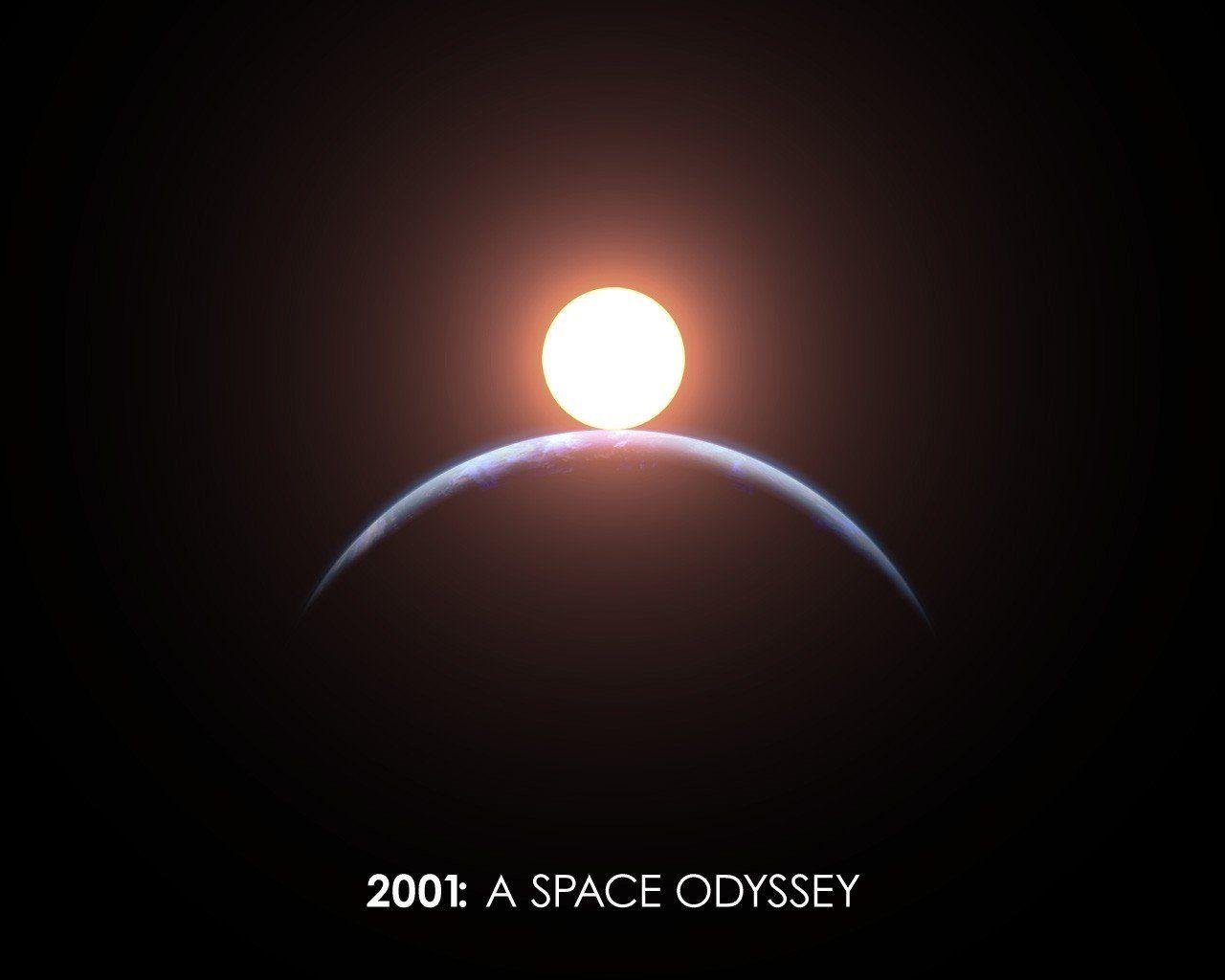
In terms of breathtaking visuals, 2001 is almost without peer. Take some of the shots in the “Dawn of Man” sequence at the beginning of the film. The camera captures vast plains during those golden hours when the sun is rising or setting. Your eye follows the long open fields until it reaches a chain of mountains before you look up to a sky painted different hues of orange and red and violet. These various shots are also long takes. Kubrick is inviting us to contemplate these vast spaces and strange colors from the perspective of the first humans, to see the world again for what it was and still can be for us today: beautiful, profound mystery. Watching these shots, I paused one frame that held those gorgeous sky colors, but I also focused my attention on the moon, a fingernail of white in the distance. How strange and amazing the sky must have seemed to the initial humans, and how often, because of guilty laments about our busy lives, do we take that strange beauty for granted today?
These opening shots set the viewer up for the pace of the entire film. We are encouraged to thoughtfully reflect on what we are watching, which means the film is not for everyone. It is not elitist, but if you watch the movie hoping to see spaceships lasering starships or flying saucers depositing little green men into cornfields, you will be disappointed.
To be sure, it is an odyssey, as its title indicates, but think of it as an odyssey where you, the viewer, take the role of hero and witness, witness to man’s origins, to the ballet of space technology, to the deeper parts of our solar system, and finally to a psychedelic and bizzare place beyond our typical notions of space travel. I say that the viewer is the hero because the movie has no heroes. To be honest, I have seen the movie a few times, but I cannot tell you the name of any of the characters besides Hal, a computer slowly becoming more human. But again, you do not watch 2001 because it's a traditional sci-fi movie or, for that matter, because of its star power or exciting plot. Instead, you watch to be inspired, to garner a deeper appreciation for mankind’s history and development, and to kindle a deeper reverence for our place in the cosmos.
Kubrick also achieves that sense of reverence by combining the pacing and visuals with expertly chosen music. The dawn-of-man scene is mostly silent, fitting for a historical moment sans music, but as the film jumps from man’s humble origins to the elegant movements of space travel, Johanne Straus’ “The Blue Danube” greets our ears. I defy anyone to suggest different music should replace it. “The Blue Danube” is a gorgeous waltz. When you hear it, you can imagine orchestras performing the song in a gorgeous 19th century ballroom as people in elegant attire dance gracefully to its supple rhythm. Kubrick, however, chooses the waltz to highlight the slow, hypnotic movements of the spaceships and the weightless, careful steps of the humans traveling inside the spaceships. When you see it, you will recognize why the scene is one of the most famous in cinema history.
But Kubrick doesn’t just choose the right beautiful music. He is also not afraid to let dissonant chords and screeching violins accompany moments when the screen turns pitch black. This momentary disorientation for the viewer provides the right contrast between the mysterious beauty of space and the terrors of space—-I haven’t seen a more disturbing movie image in the last few years that can compete with the scenes in 2001 of an astronaut unmoored from his ship and hurtling alone in the black voids of space.
Some other aspects of the film stand out. For instance, instead of a green alien with a pregnant-looking belly and an oversized head, the film’s “alien” is a monolisk, which appears at key moments during our odyssey through the movie. The monolisk remains mysterious throughout and probably serves as more of a macguffin than anything else, but I appreciate that the object does not distract our attention away from the awe we experience while watching 2001.
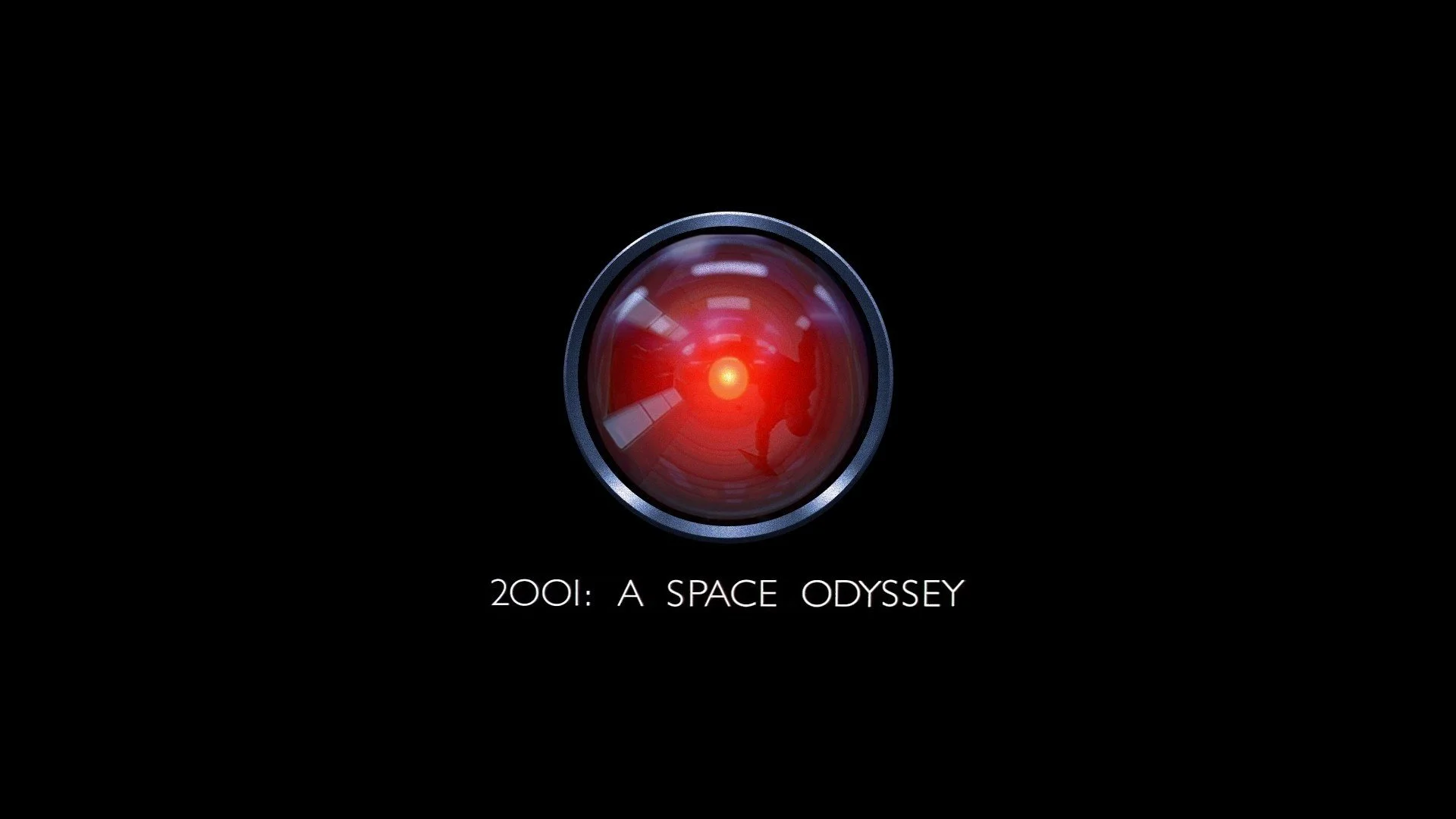
And in its way, 2001 also invites us to think about some of humanities’ bigger questions. For example, the “dawn of man” scene I mentioned earlier asks us to think about the origins of human violence and perhaps how that violence, and how we dealt with that violence, led to advances in human culture and human technology. Also, the character of Hal, which is a talking computer that starts to become more and more human, with dangerous consequences for two astronauts in the film, asks us to think about our relation to modern tech, especially AI. And although I think the idea of computers becoming human is absurd—computers are not brains and brains are not computers—I do appreciate that the movie asks us to think about that fascinating topic.*
I must add that Kubrick has a reputation for being technically efficient as a director, especially with imagery, music, and composition, but he also has a reputation for being cold towards the human characters in his films. This criticism is partially valid, especially in 2001, but it is amazing to find oneself emotionally attached to the character of Hal and his demise, which Kubrick films memorably: an astronaut must “kill” Hal by removing his various computer parts. The astronaut does so slowly, methodically, as required by his space suit, and he does so in a room lit in dark red, which is also the color of Hal’s camera eye. The red lighting, which the viewer will associate with blood and murderous passion, combines memorably with the laborious movements of the astronaut, the loud sounds of the astronaut's slow, heavy breathing, and the voice of the Hal computer: polite, British, calmly pleading for its life. The scene attaches you emotionally to Hal, and like so many scenes in 2001, once you see it, you’ll never forget it.
Hal’s “death” does not end the film, however. That same astronaut who destroys Hal is eventually transported, via the monolisk, to a strange home somewhere deep into uncharted space territory. The journey there is memorable. As far as I can tell, in fact, the journey to the strange place is as psychedelic and mesmerizing as anything ever filmed, and what to make of the strange house that holds most of the film's final, eerie scenes? Better to let you experience them yourself. I will just say that these scenes in the strange house remind me of another Kubrick film (The Shining) famous for its rooms and hallways that evoke a potent sense of dread.
The Vatican listed 2001 as an important film because of its artistic achievement, not in one of the other two categories, value or religion. I understand why. The film might upset some because it certainly does not attempt anything like a Christian worldview, but I believe the major merit of the film, besides its memorable aesthetic qualities, is that it can help restore our sense of wonder. We often lose this sense of wonder as we move daily through our busy lives, so I embrace any art that shakes me out of my spiritual torpor and helps me recover the sense of reverence and awe I should always have for Creation.

To my mind, 2001 achieves that lofty aim. Some might disagree. They might argue that Kubrick’s film is beautiful but that its beauty leaves the viewer cold, cold because the film lacks any feeling for the human characters inside the story. But again, try to watch the movie without worrying about the characters. Instead, watch it with the understanding that Kubrick has handpicked you to come along for this strange, bizarre ride from earth to space and beyond.
And remember this: the three Catholic transcendentals are truth, goodness, and beauty. Whatever the criticisms of Kubrick’s 2001, the movie certainly belongs in the transcendental category of beauty, and as John Keats famously said: “a thing of beauty is a joy forever.”
* Again, computers are not brains and brains are not computers. A computer does not consciously think about what it is doing any more than your microwave is conscious that it is heating up your delicious turkey meatloaf for sixty seconds. However, I am oversimplifying a complex issue in the philosophy of mind. If you are interested in learning more about a fascinating topic, you can start with a great book that can help ease any laymen into the complexities of human consciousness and its relationship to computer technology: David Bentley Hart’s The Experience of God, especially chapter 4 (Consciousness). If you want a broader introduction to the philosophy of mind, Edward Feser’s Philosophy of Mind is fantastic.
