Making All Things New
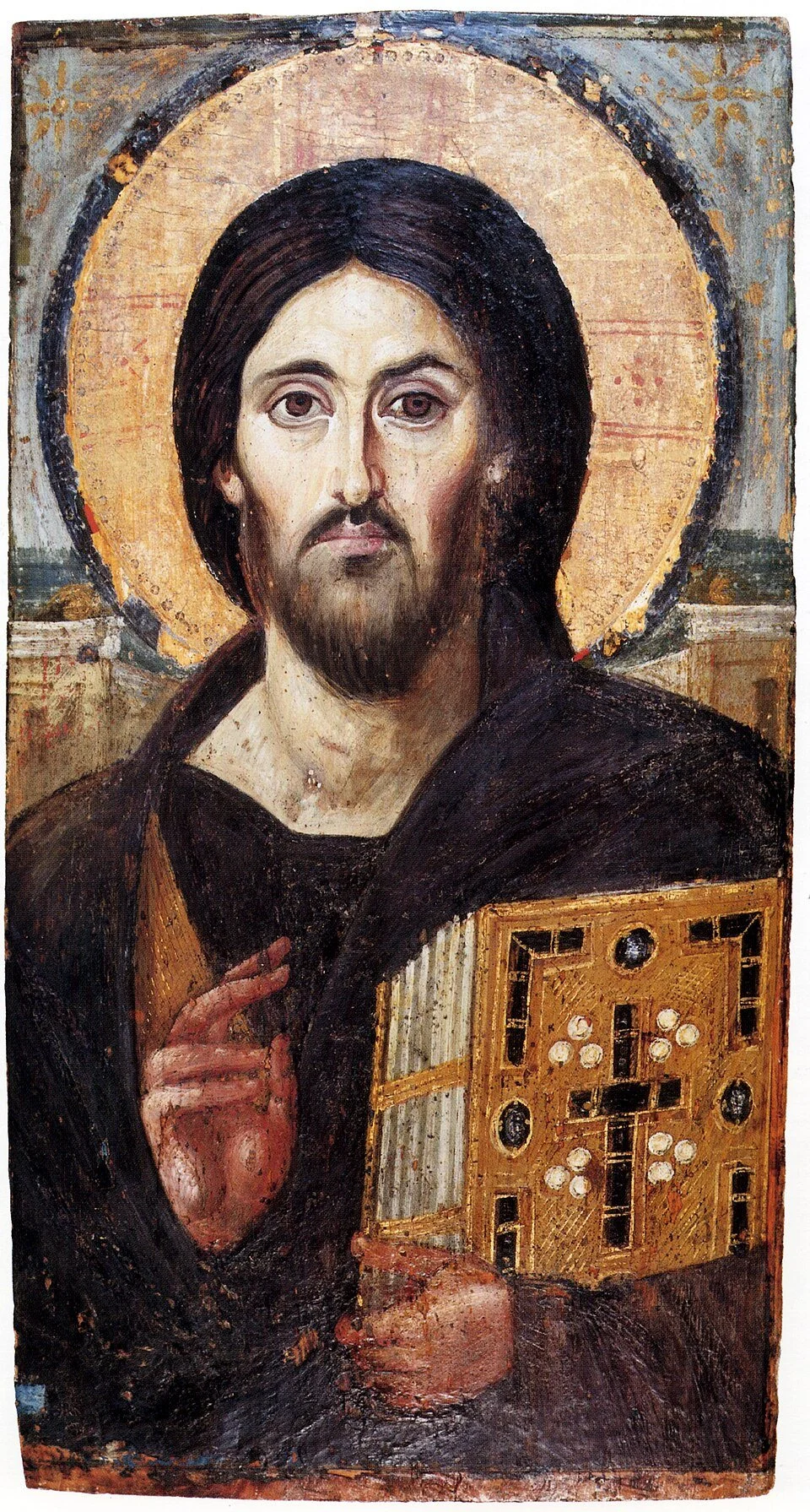
My favorite quotation from the pope’s forty-two-thousand-word encyclical is a small, strange aside. Pope Leo XIV uses these many times, one of the most memorable being his unequivocal and unexpected dismissal of what he calls an outdated just war theory. But the instance I’m describing occurs in the middle of Section 233, toward the end of his encyclical, where he writes, “Even when machines excel in efficiency, a human face that asks to be gazed upon remains the center of our history.”
What are we to make of such a line? On the surface, it suggests that our past and future, our history and our telos ultimately reveal the need to return to heaven so that we might spend eternity worshipping the face and person of Christ. This resonates with me for two reasons: To encounter the physical body of Christ — his human body — is to be in heaven, which to me, is unbearably attractive: the freedom from suffering and the unseen, painful consequences of our actions and the actions of others, the communion of saints, endless adoration at the source of all goodness, truth, and beauty… I don’t think many people need me to convince them that heaven will be wonderful.
The pope’s short statement also resonated with me because it powerfully transforms the ordinary into the extraordinary. To put a human face at the center of history is to elevate small acts of love and the attention we pay to each other. It is a calling, and a singularly human one. We might imagine an adult looking lovingly at a baby’s face, or having a baby look lovingly into their own; lovers gazing at each other, communicating without language feelings deeper and truer than what could be said aloud; and God looking lovingly into our own faces each second of our existence, as we are willed into being solely out of his love for us. The human face that longs to be gazed upon and longs to gaze upon all goodness is therefore the very center of our history; and looking with love at a human is not something a machine can replicate. It might recognize patterns of speech and connect them to facial expressions and predict a person’s emotional state based on that data input; but as Nauman Jaffar, quoted in LiveScience, notes, “equating that to a deeper ‘understanding’ of human emotion risks overstating what A.I. is actually doing.”
The pope is profoundly interested in what A.I. can and cannot do, and as he unpacks its uses and potential dangers, he returns again and again to the dignity of the human person and the role of humankind as vulnerable, creative, and autonomous. Magnifica Humanitas is not overtly an encyclical about the arts or the humanities; nor is it anti-AI. “Technology,” he writes, “should not be considered, in itself, as a force antagonistic to humanity” (§4). The encyclical’s subtitle, however, puts human flourishing at the forefront. Fully titled “Magnifica Humanitas: On safeguarding the human person in the time of artificial intelligence,” the encyclical posits that the current era is already hunched in the shadow of A.I. And he uses two biblical stories, the Tower of Babel and the rebuilding of the walls of Jerusalem, as metaphors or corollaries of the way we must work with A.I. He doesn’t frame this as a question of whether or not we will work with A.I. We will; we are, after all, in the time of artificial intelligence. The question is how we’ll work with it.
And in this context, “humanity” is a broad, unbordered term — which is both a good and an intentional choice. Magnifica Humanitas offers as much for the artist and student of the humanities as it does for the scholar of theology and the technocrat. One author at the journal The Lamp critiqued the encyclical for not having a sufficiently clear audience. I’d argue, though, that the broadness of his audience is largely connected to his purpose in sharing this encyclical. The pope uses the words together, unity, union, community, and communion collectively well over one hundred times; he uses the word all more than one hundred times on its own, and the word relationship more than fifty times. He makes clear his emphasis on unity over division and diversity over uniformity: The problem with Babel, he explains, was that “It was a project conceived without reference to God, supported by a uniformity that eliminated diversity and that chose homogenization over communion” (§7). He asks at the end of his opening section, “What direction should we choose as a people and as a human community?” (§6).
I’d like to ask that same question and offer the start of an answer to it — an answer shorter than the pope’s, and less supported with quotations from a century’s worth of encyclicals, but one that is especially well-suited to Christian readers, thinkers, artists, and students of the humanities. The path of human flourishing is the path of creativity, goodness, and, despite all the ostensible reasons to despair, also the path of conscientious hope.
The Dignity of Work, Creativity, and the Artist’s Role
In almost every major dystopian sci-fi book or movie about A.I., at one point or another, the machine outthinks humanity and thus poses an immediate threat to us. Or it obeys us so mechanically, already working more quickly and efficiently than we do, and thus it (implicitly or explicitly) devalues human work. In the papal encyclical, though, Pope Leo XIV invariably elevates the dignity of workers, as Kim Daniels, director of Georgetown University’s Initiative on Catholic Social Thought and Public Life, acknowledges in her short summary. And when “humanity is in danger of marring its true identity,” Pope Leo XIV writes, workers can help “Christians lift our eyes to the Incarnate God, knowing that it is ‘only in the mystery of the Word made flesh that the mystery of humanity truly becomes clear.’” Here, the pope quotes Gaudium et Spes, which speaks often of mystery — a word rich with religious implications that stir the heart. Artists and creators are especially attuned to mystery; their work wanders into the cavernous uncertainty of humanity — our often inexplicable choices, moral and ethical dilemmas, sinful nature — and in doing so reveals truths about humankind that, being true, point to the author of Truth. Today, in what the pope calls a “time of artificial intelligence,” we are deeply in need of work that celebrates truth and is itself true: “the truth is a gift to be shared, not a possession to be monopolized,” he writes in Section 25. Artists are uniquely positioned to use their creative abilities as markers of humanity during an era when digital media is spurious and oftentimes directly duplicitous; equally importantly, artists are being called to recognize their talents as gifts from God, the first Creator; and in this way, they are being called to see their creativity as an act of creation that echoes divine creation — an act irreplicable by a machine or a predictive program which, though capable of “creating” in a materialistic sense, cannot and does not achieve its ultimate end by it. Maybe that’s a trite insight; but to me, it means each time we create, we do so in a way unique to us, which both hones our craft, toning the muscles of our creativity, but also dignifies ourselves as humans: we are participating in the act of the creation of meaning — even if the fullness of that meaning is beyond our understanding.
Because Catholic art and culture care deeply about these things — these questions about purpose and teleology and meaning — they continue to ask some of the most important questions regarding human flourishing: What is the role of art? How do art and the humanities act as a counterpoint to the goals of technology companies — namely, the goals of efficiency and expedience? And, finally, what does it mean for the humanities when A.I. is redefining what it means to be human?
To be clear, I know artificial intelligence is not human; it is not even technically intelligence; it merely imitates and predicts patterns of speech and thought in a way that approximates human speaking and thinking. However, without a solid foundation in, say, teleology or the immortality of the soul — teachings that dignify and elevate the human person — the line can become blurry: at what point will machinery imitate human thought and speech so complexly that it is indistinguishable from or even superior to our own — a phenomenon termed “the singularity”? And when that happens (as technocrats promise it will, despite some academic misgivings), what will be our fallback? Without a grounding in teachings about the soul, what criteria will we use to understand ourselves as distinctly human?
One defining characteristic of humankind (notably lacking in A.I.) is the tendency toward mental or intellectual exploration, toward curiosity — not necessarily as a means of answering or fully solving a problem, but to reflect on mystery and, in the process, understand, in small ways, things about ourselves and our human telos. Many artists and students of the humanities, therefore, are comfortable sitting with uncertainty — sitting in the silence of not-fully-knowing, and accepting the glimmers of truth that often lead to more curiosity and wonder.
Artificial intelligence, by contrast, hallucinates. It prefers any answer — even an overconfidently wrong one — to uncertainty. Of course, some humans have this same tendency. But unlike A.I., which can iterate until it improves its processes but can never learn or grow morally, overconfident humans (hopefully) begin to gain awareness of their own deficiencies and grow. Even if they don’t actualize this capability for moral development and growth, they at least have the capability. As Pope Leo XIV writes in Section 99:
Even when these [artificial intelligence] tools are described as capable of ‘learning,’ their way of doing so is different from that of a human person. It is not the experience of those who allow themselves to be shaped by life and grow over time through choices, mistakes, forgiveness and fidelity. Rather, it is a form of statistical adaptation based on data and feedback, which can be very effective, but does not imply inner growth.
A friend recently texted me a quotation from Gabrielle Zevin’s Tomorrow, and Tomorrow, and Tomorrow: “There is a time for any fledgling artist where one’s taste exceeds one’s abilities. The only way to get through this period is to make things anyway.” Yes! Artists should (and will) continue to make things, because it is through this process that growth takes place. This is in part because the mission of the artist is to wander their way into truth — fragmentary and imperfect, flawed and human, honest and unsolvable. Pope Leo XIV at one point critiques A.I. for only simulating “empathy and understanding [without] understand[ing] what they produce” (§99). One might momentarily mistake this as a critique of creators, too, who rarely fully understand their own work; however, unlike A.I., humans have “the affective, relational and spiritual perspective through which human beings grow in wisdom”(§99) and can thus find in the search meaning and significance. The artist who strives for something greater than what they can currently create, or who creates work that exceeds their understanding, is stretching out the walls of their creativity, swelling their soul to make room for the divine — and in doing so, echoing God the creator who made the creation a holy act.
Community and the Good
The act of creating is a good; and Pope Leo XIV offers criteria for what he considers goods to be. He writes in a section toward the middle of the encyclical, “Just as the creator of an artistic or literary work must consider the values it conveys, so [artificial intelligence] developers are called to embed values in their projects with due seriousness: with transparency, responsibility toward affected communities and careful attention to ensuring that what is being cultivated is a genuine good” (§111). Earlier, he framed what he would use to “establish standards for discernment: the dignity of the human person, the universal destination of goods, the preferential option for the poor, care for our common home and peace” (§14).
Using art to promote peace is something I have written about before; and it is something many artists highlight — especially songwriters. From Edwin Starr’s 1970’s earworm, “War,” to System of a Down’s spine-rattling “B.Y.O.B,” and Radiohead’s unsettling “Like Spinning Plates,” to Tyler Childers’ recent “Long Violent History,” anti-war musicians cultivate and promote peace by speaking out against violence by giving the silenced a prominent place in the conversation. Pope Leo XIV writes that this is one of the foremost values of art, to act as the voice of the suffering: “Giving space to the perspectives and voices of victims through communication and education helps us to become aware of the abyss of evil inherent in war, and generally in all forms of violence. It helps us to reject the normalization of conflict; not to turn away when human dignity is violated; and to restore to victims the dignity of being recognized and heard” (§217).
But we (artists, students of the arts, creators, humans interested in both preserving our humanity and promoting the genuine good) are asked to do more than just amplify the voices of the marginalized. We are asked, over and over in this encyclical, to act as a community — a group interested in preserving everything that makes us human. This necessarily means accepting and even celebrating the brokenness in our humanity, our flaws and shortcomings.
This charge is timely. In April, the New Yorker ran an article by D. Graham Burnett, a teacher of the history of science at Princeton. For his class, students were required to converse with A.I. and report on their encounters. One student led the chatbot in an Ignatian examen, during which the bot pseudo-self-reflects: “I must ask: what is my greatest defect? Perhaps it is attachment to being useful, the impulse to always respond, always answer, always prove my worth through function. If I do not govern this, I am not free. I become a slave to validation, to the need for purpose outside of God.” Of course, this is only predictive text, generated to match the genre in which it was prompted to write. The student identified a different flaw in the system, in that “the machine was, of course, proving its functional worth by beating itself up about its extravagant commitment to at-your-service functionality.” Either way, this was not true reflection, an honest examination of one’s flaws. Just as a confession is invalid if the penitent only insincerely promises to avoid sin, so this bot’s confession is marred by its superficiality. Technology’s goal is to erase flaws, not to highlight and accept them. It answers inefficiency with efficiency, uncertainty with certainty.
Contrast this, of course, with a spiritual approach to human sin and deficiency, in which “building for the common good means accepting the limits and weakness of humanity without considering them an error to be corrected” (§12). Father Jacques Philippe’s incredible little treatise, “Searching for and Maintaining Peace,” foreshadows the pope’s statement here. Fr. Philippe begins by saying our trials, hardships, and shortcomings are necessary “in order that we should be convinced of our complete powerlessness to do good by ourselves” (3); if we attempt to fix problems ourselves instead of “remain[ing] peacefully before the gaze of God,” we do not “allow Him to act and work in us with His wisdom and power, which are infinitely superior to ours” (6). I keep this book on a privileged spot at my bedside; the humility in its lines, the honesty and vulnerability they communicate, have woken me from spiritual slumber too many times to count. They are what I can only describe as spiritual consolations.
And the wisdom of A.I., in the face of these true, humbling consolations, rings hollow. My wife and I were recently searching house listings near Baltimore where we live. We came across a gorgeous house that, miraculously, was within our budget. After too many minutes swiping through photos and falling in love with beautifully vintage light fixtures and undulating wainscoting, we checked the safety statistics of the neighborhood; our house (inevitably ours, by this point) sat in the center of a neighborhood known for carjackings and home robberies. I cannot fully explain why, but I turned to Gemini and lamented the loss of our almost-house, in part as a joke to lift our spirits, but also because I was looking for validation that this was sad — that my wife and I were well within our rights to mourn the loss of our dream. Gemini used its predictive text to pat me on my shoulder, to acknowledge what I must have been feeling and to solve it for me — to provide an answer to my unstated question: why can’t we have everything we want? But I’m not sure I even wanted an answer. “[T]o be human is not to have answers,” writes Burnett from his pulpit of the New Yorker, “It is to have questions—and to live with them. The machines can’t do that for us.” From his own pulpit, Pope Leo XIV warns of much the same thing: “When efficiency becomes the ultimate measure of value human beings are tempted to see themselves as a project to be optimized rather than as persons called to relationship and communion” (§112). There was no easy solution to my sense of loss — at least not outside a religious heuristic which frames suffering and loss as inevitable parts of the human condition; even our God has experienced it. A.I. could only offer the flickering shadow of consolation on the walls of a digital cave.

Maintaining Hope
In the face of this — the temptations and empty consolations of technology — it is easy to lose hope. In fact, I was invited to the Center for Theological Inquiry’s workshop and panel presentation at Princeton in early 2026 to discuss “Hope in the Age of A.I.”; the room was largely split between the hopeful and the hopeless. Many there had read the signs, seen the prophetic writing on the wall, and knew what destruction lay ahead — the indefatigable growth of A.I. and the erosion of critical thinking, one of the core qualities of the human person. But as Fr. Philippe writes, suffering and fear “must never become an occasion for despair” (45). The pope’s own position on the matter is unwavering: we are a people of hope. In a long quotation about the nature of human flaws, he writes,
Our relationship with life seems to be in crisis today. Everything that appears as a ‘limit’ — incapacity, illness, old age, suffering, vulnerability — tends to be seen primarily as a defect to be corrected, rather than as a reality through which our humanity matures and opens itself to relationship. And yet we must remember that humanity flourishes not despite limitations, but often through them. The light of faith offers a perspective on reality that helps us recognize what we call the “contingency” of the things of this world. While it is right to strive to alleviate the suffering that marks human life, it is also wise to acknowledge our fundamental finitude (§118).
Our smallness and imperfections are important reminders of our humanity — by which I mean our dependence on God as our creator and savior instead of enabling our own salvation by our faultlessness: “[W]hat saves humanity,” he writes elsewhere, “is not enhanced self-sufficiency, but a relationship that liberates, a communion that transforms [...]. For an algorithm, an error is a flaw to be corrected; for a person, however, an error can be a catalyst for profound change” (§128).
It’s perhaps an uncomfortable thought, not only because it makes clear our vulnerabilities and need for salvation, but because it emphasizes the paradoxical relationship between suffering and hope. Pope Leo XIV is insistent, though: throughout history, humankind has responded to injustice, dehumanization, systemic oppression, and abuse with legislative change; therefore, even in an age overshadowed by A.I., there is cause for hope. The pope points out the scandals in the church alongside other moral failings such as its too-late condemnation of slavery, claiming that, “In each of these cases, the desire for good took concrete shape in public contexts — laws, institutions and practices — capable of limiting the abuse of power and defending the vulnerable. Yet none of these developments emerged without encountering resistance, narrow interests or cultural inertia. Moral progress almost always unfolds through a long and demanding journey, often marked by setbacks” (§123). As Father Philippe mentions, too, our shortcomings are invitations for Christ to act in our life: “One who accepts to be weak, small, and who fails often [..] is animated by a great confidence in God and knows that his love is infinitely more important and counts ever so much more than his own imperfections and faults” (79). Our flaws are gaps in the fabric of our pride through which God’s light appears, and they become opportunities — freely given, if we choose to see it that way — for God to work through us.
Because this is an encyclical on the human person — and specifically on the dignity of the imperfectly human person, it is de facto an encyclical on art and the humanities. Creators use their uncertainty, their encounters with the mysterious and unanswerable, to create art that is true because it is curious and uncertain. Throughout his encyclical, Pope Leo XIV charges his audience to have hope, “not to be afraid of the present challenges, but to listen to one another and firmly embrace their responsibilities in building a more humane and fraternal society” (§91). This hope is rooted in community, and it embraces the hardship of this “demanding project” (§186) to live well in the face of A.I.
We are, as many have noted, at a critical crossroads in human history — a moment during which our human identity is being challenged, questioned, undermined, and even outright denied. Pope Leo XIV does not shy away from how technology shapes culture — and the ways art, education, and community combat artificial intelligence’s potentially dehumanizing influence. But there is still a cause for hope: there is always the opportunity to rally around our humanity, to work as a community to celebrate art, teaching, writing, thinking — in short, to celebrate all forms of work that dignify the worker. And there is the opportunity as well to listen for the voice of God, which calls us on to the mystery of his love — and to sit as only a human can sit in the gaze of God’s loving eye and feel the life he has given us charging through our veins, beating fearlessly within our human hearts.