I am searching for those I admire through rows of steel gray concrete headstones under a broad and bright sky in Asheville, North Carolina. My clues are pens as marking points and coins laid as treasure at Riverside Cemetery.
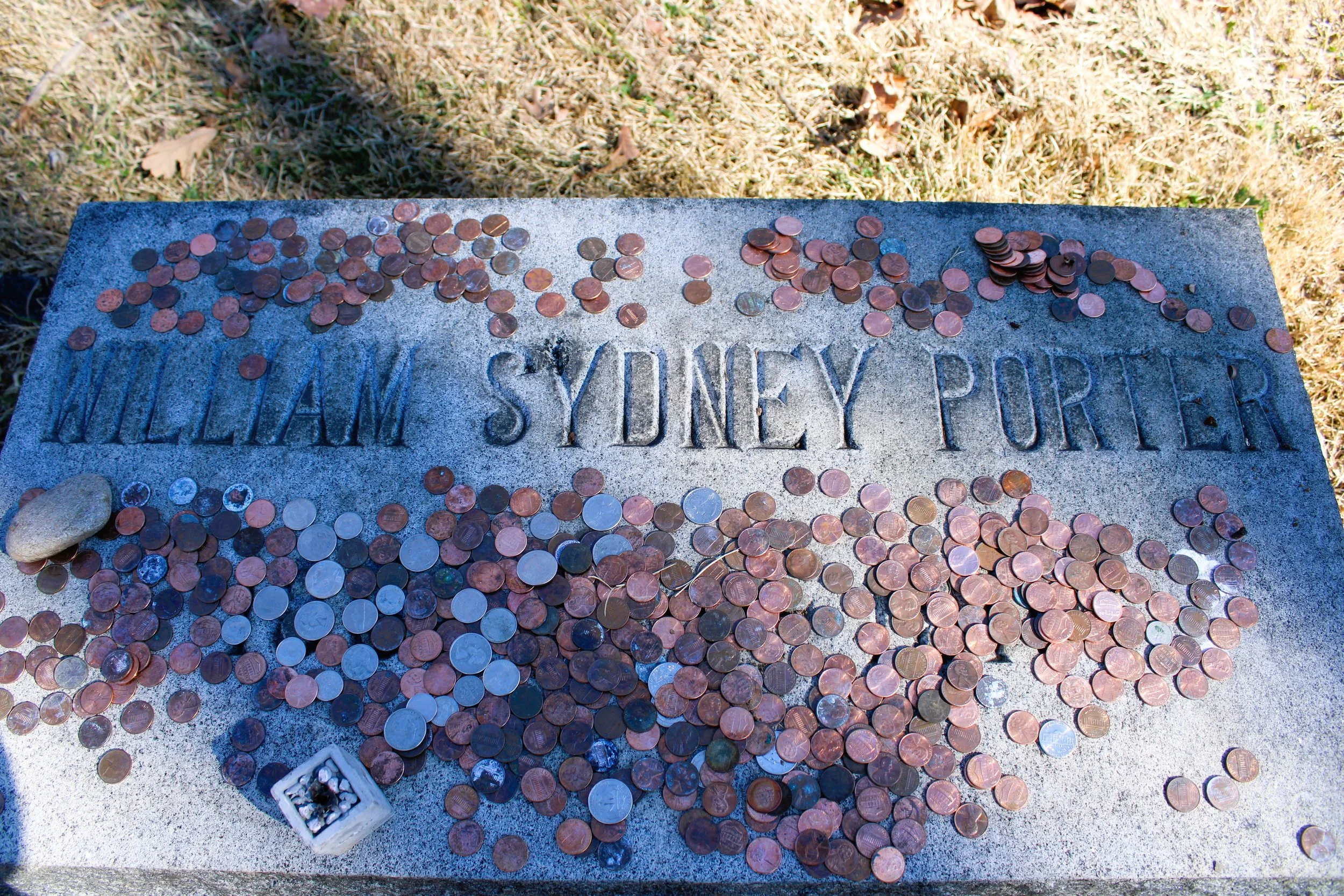
The caretaker sees me wandering and hands me a map that leads to the graves of authors Thomas Wolfe and William Sidney Porter, best known as O Henry. When I reach O Henry’s grave other seekers have come with gifts -- one dollar and eighty-seven cents and that is all-- to honor O Henry’s opening lines in The Gift of the Magi. They lay there as a relic of offerings, a handful of change counted and placed upon the threshold where O Henry still welcomes his fans.
O Henry’s grave represents the irony of mercy he wrote about so well, even if it is disguised as pocket change. Those who visit his grave remember the way the author highlighted the small and foolish actions of a husband and wife in The Gift of the Magi. Their gifts for Christmas become useless to one another, but their love makes them wise as they hold a hair comb for hair that is now too short for it and a watch chain that holds nothing to keep the time. O Henry’s prose reminds me that while we judge the actions of others, we still do not know enough because only God knows the heart of Jim and Della’s story that has captivated readers for more than one hundred years. It seems that O Henry, who wrote under a pseudonym because he was once imprisoned for embezzlement, understood ordinary people in desperate situations.
As I walk through this Victorian cemetery I see places of resting beauty. There are ancient oaks near flowing ivy vines crawling over stone mausoleums and draping statues of angels. The cemetery has road signs of a sort for its more famous residents, and I finally find a white signpost alerting me to the next literary genius buried here, Thomas Wolfe. I am used to visiting cemeteries, having buried many of my own family in grief, but also visiting them as part of my religious heritage as a Catholic. We pray over graves regardless of creed. I have come to offer Profundis over these graves of literary writers I admire. It is a cry for them to rest in peace, and part of a belief that if you pray for others, they too can help you with their own prayers from above. I stand over Wolfe’s grave thinking about frustrations and rejections that he too must have felt as an author. His followers have left gifts as well, a myriad of ink pens around his gravestone and an inkwell of sorts, a diminutive concrete vase with ink pens bunched inside like the dead man might reach up from the ground and need to pick a pen to write something down.
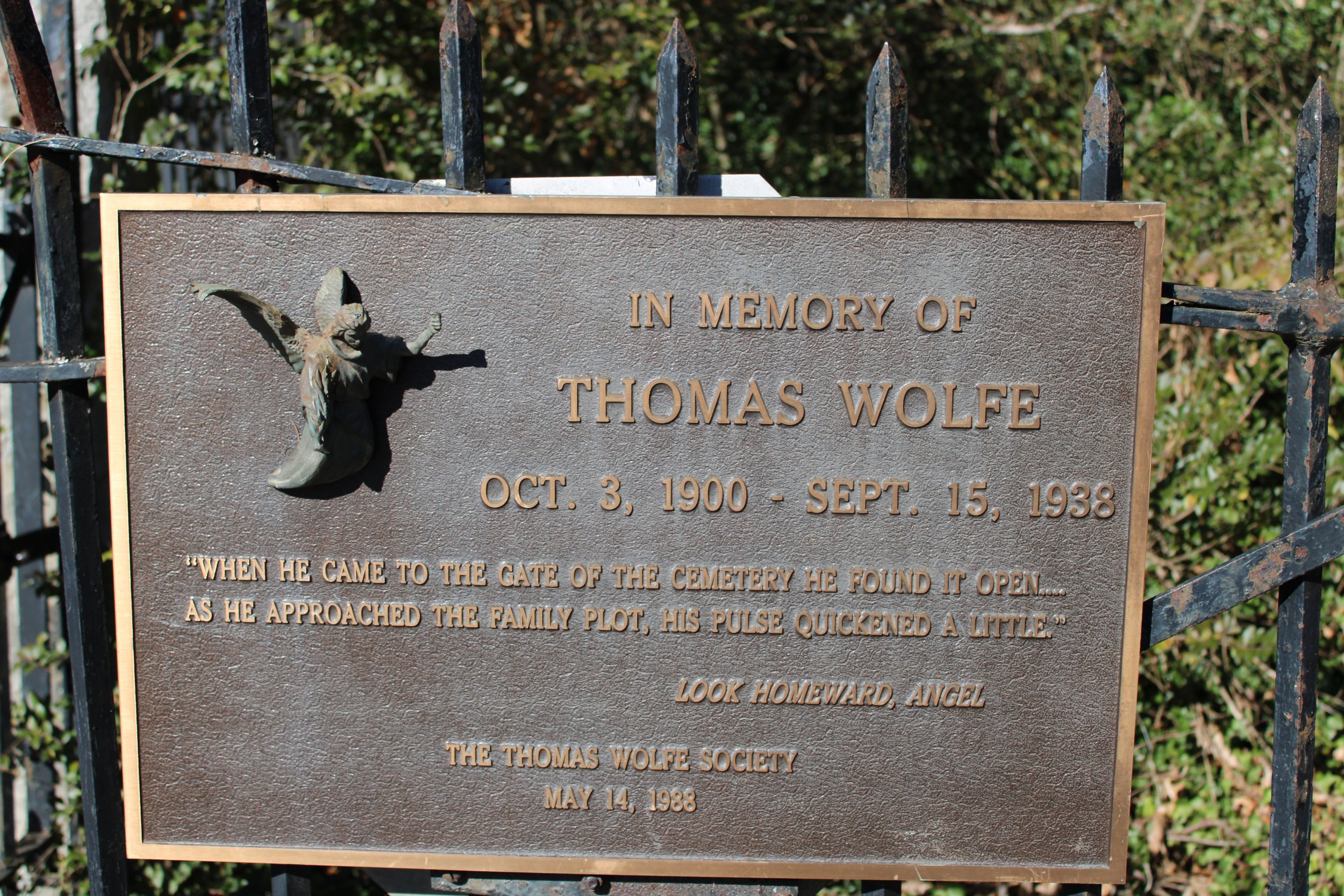
The gate of this cemetery holds a plaque that quotes Wolfe’s novel, Look Homeward, Angel: “When he came to the gate of the cemetery, he found it open as he approached the family plot, his pulse quickened a little.”
I have approached Wolfe’s family plot, as well as O Henry’s and it seems at Riverside, writers do not need blossoms to honor them. Ink pens and coins are strewn like flower petals around the graves, a fitting bouquet for the author’s craft.
These specific graves represent a literary mystery about how words linger long after your body fails and your deeds are counted and buried with you. It is a representation of those who read these works and still pay homage to the authors. Wolfe, criticized for his autobiographical fiction, his mother’s boarding house was the setting for his bestselling novel, is also known for filling seventeen ledgers about his trip to Europe published in O Lost. His astonishing memory of everything he saw and heard tormented him until he wrote it all down producing long manuscripts. It is no wonder why pens stand in for flowers at Wolfe’s grave. When Wolfe was asked to cut words, he added them. His books speak about human meaning and a transcendence that portrays how beauty can wound but redeem as well.
As my procession among the graves continues, I am reminded of Wolfe’s lyrical excerpt from Look Homeward, Angel that explores the cyclical nature of time.
“All things on earth point home in old October; sailors to sea, travelers to walls and fences, hunters to field and hollow and the long voice of the hounds, the lover to the love he has forsaken,” he wrote.
My visit to the graves is ending and it is time for my offering from the tradition handed down to me. I make the sign of the cross and pray for these literary souls: “Eternal rest grant unto them, O Lord, and let perpetual light shine upon them. May the souls of the faithful departed, through the mercy of God, rest in peace. Amen.”
I have made my first Ternary of the year -- the Latin term for visiting the dead three times that originates with the devotion to the Poor Souls in Purgatory. The faithful have always visited cemeteries to pray, clean the graves, and gain an indulgence on All Souls Day in November. However, the tradition of visiting cemeteries three times a year is still practiced by individuals, and some religious communities, during Candlemas in February, the Easter season, and on Michaelmas in September. While my visit does not fall at these times, it is no less powerful.
It deepens my spiritual imagination into a lived pilgrimage of honor, despite the time of the year, because “the word was made flesh and dwelt among us,” and for some reason God takes authors and their writing and makes it eternal. It is an incarnation that should make our hearts thump each time we take out our pen or count the change we receive from writing with it.