
Europe In These Times: Semana Santa
Alicante, Spain, 27 March – 5 April 2026
all photos provided by the author
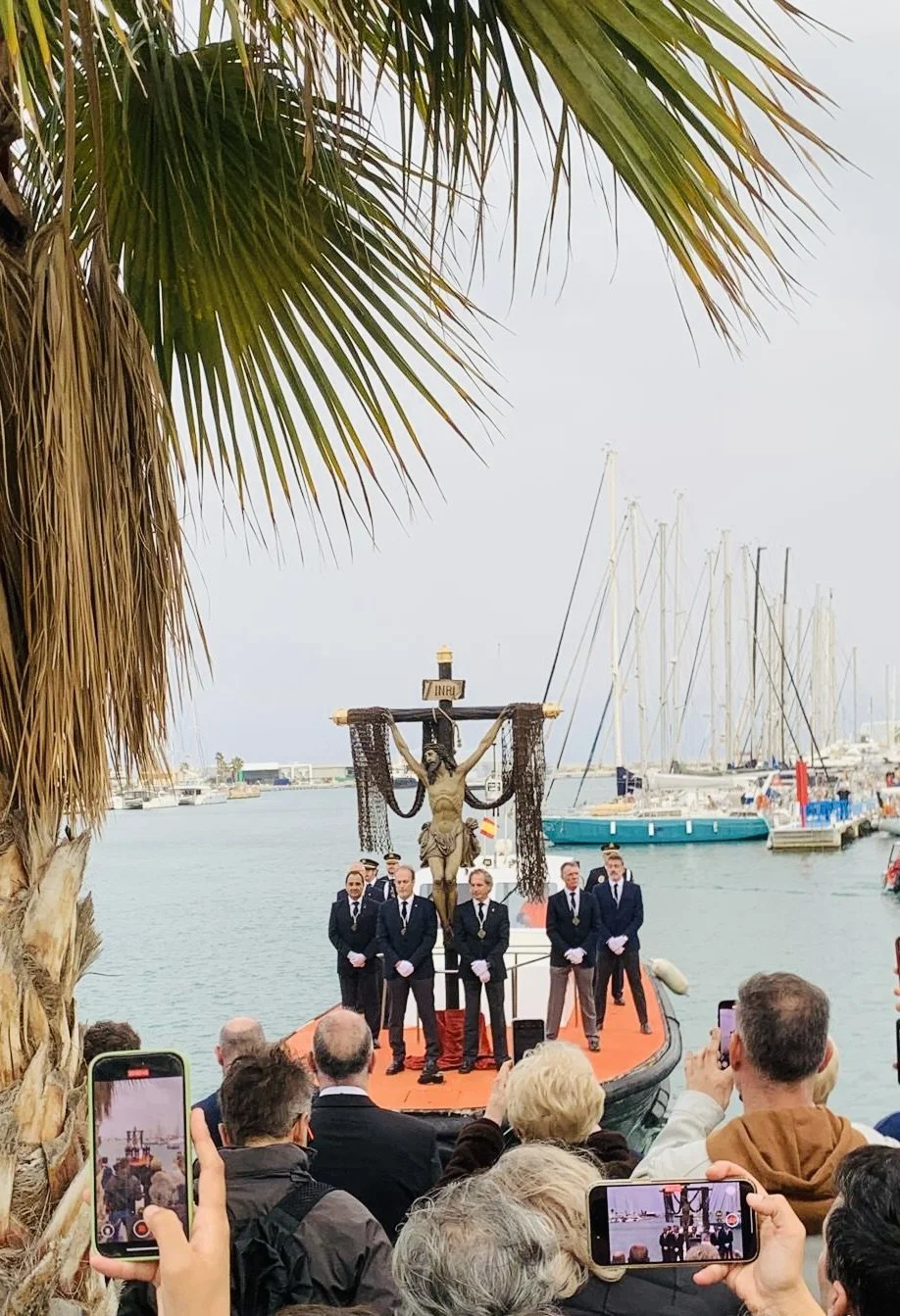
In the early evening of Friday, March 27th, 2026, a small boat appears across the harbor, approaching the wide waterfront sidewalk, or paseo, where dozens of onlookers await the craft’s arrival. Framed by the moored sailing vessels of locals and the megayachts of the wealthy foreigners who have paid professional crews to call on this sunny Mediterranean port, the small boat nears. As it does so, it becomes clear that there is something rising off the boat—like a mast, but different. Then it comes into view: it is a life-sized crucifix, draped with a fishing net as an homage to the traditional industry of this southeastern Spanish city (and of all the coast surrounding it). Finally, the boat arrives at the paseo. The men that had stood in a “V” around the crucifix in their suits and white linen gloves get to work, lowering the cross so that the Christ faces upwards and the wood of the opposite side rests on their shoulders. They step off the boat and onto the paseo, parting the crowd. They then turn and walk northeast along the coast. This is the event that signals (as it does every year) the coming of Holy Week, Alicante, Spain, 2026. It is a week, and a place, to be experienced, as it offers the moving spectacle of an entire community immersing itself in the religious significance of these several days.
Holy Week, or Semana Santa, is celebrated all across Spain (and, indeed, in many corners of the world). Here in Alicante, the whole city is transformed, with streets shut down and the music of processions floating through the air across neighborhoods and plazas. The main attractions are the floats, or pasos—carefully crafted, wooden Gospel scenes set upon ornate and often flower-lined platforms—that are carried out the doors of one of the city’s many churches. These pasos wind through the streets of the town on a pre-designated route, generally making their way to Alicante’s main artery, the Rambla de Méndez Núñez (or simply La Rambla), where bleachers are assembled six rows deep for spectators. Each paso is carried by a unique hermandad or cofradía (both meaning brotherhood or sisterhood, although all such groups consist equally of male and female members). As befits the social significance of every cofradía, the pasos are accompanied by full music bands and marchers in traditional dress (Nazarenos or Nazarenes in their white or colored robes; Manolas/Damas de Mantilla, or ladies in black veils and shawls), with the marchers often carrying candles during nighttime processions. When small children number among the marchers, as they often do, they will freely pass out candy to any spectators of their same age.
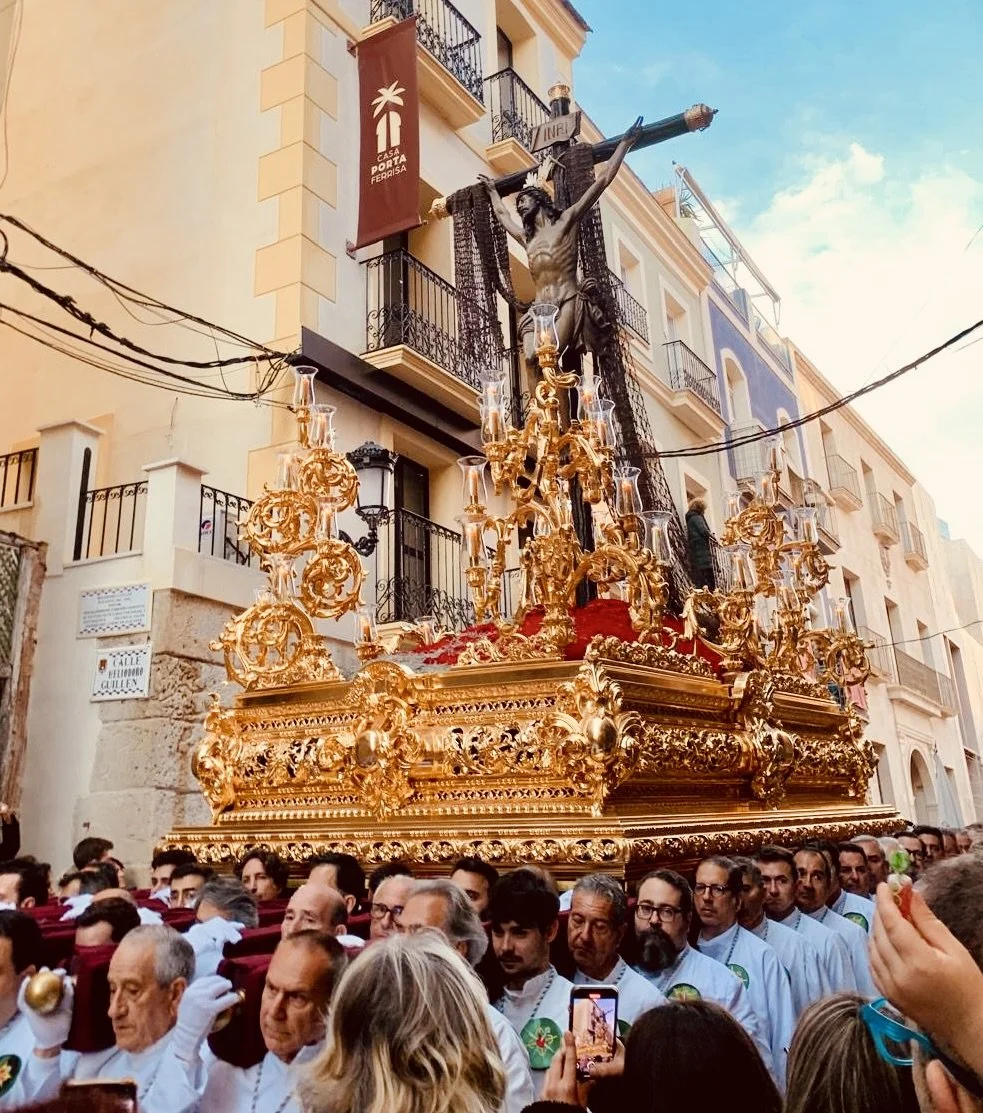
The least seen or noticeable of the participants in these processions, however, may be performing the most impressive feat: “costaleros” is the traditional title for the people that carry the pasos along their routes, resting the wood of the floats upon their shoulders as they proceed through Alicante. This is, quite literally, no small matter; as just one example, the life-sized replica of the Last Supper carried by the Salesiana Hermandad Sacramental de la Santa Cena weighs over three tons, requiring some 220 costaleros. Every procession travels several miles on its designated path; some of these marches last more than five hours, and others do not end until one-thirty in the morning.
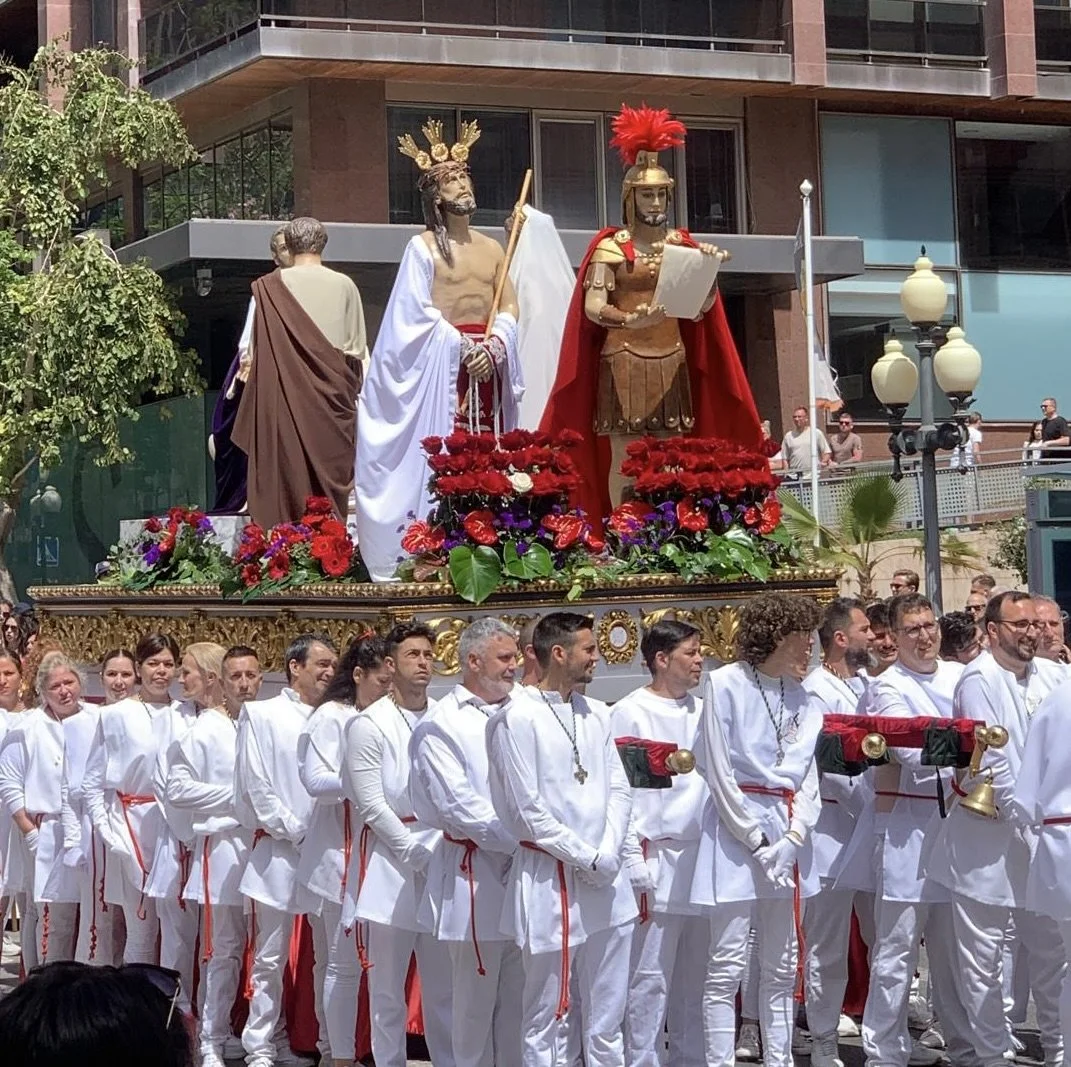
The sheer number of processions and cofradías is staggering: there is that Friday boat arrival of the crucifix, followed by a Palm Sunday in which seven separate pasos wind through town, including the palm-lined scene of Jesus’ entry into Jerusalem carried by the Hermandad de Jesus Triunfante. Monday and Tuesday see four pasos each, followed by two on Wednesday and five on Holy Thursday (including the Last Supper conveyed by the Hermandad Salesiana de la Santa Cena). Good Friday, appropriately, is characterized by a more somber tone; although there are four pasos that day, they are often silent (i.e. without musical accompaniment), and they display scenes that aptly evoke sadness: the Cofradía de la Sentencia de Jesús carries the scene of Jesus being sentenced, and the Hermandad de Santo Sepulchro carries Jesus laid out in His tomb.
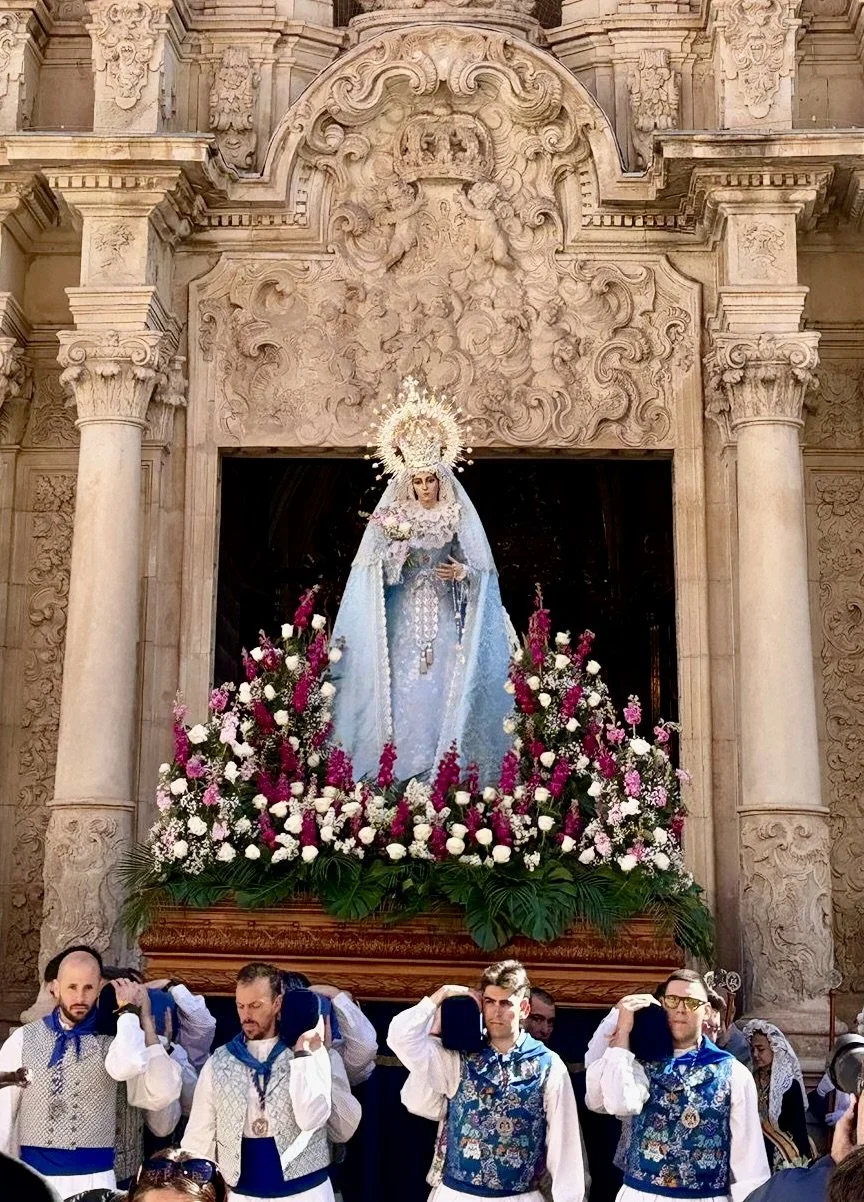
After a quiet and processionless Saturday, the emotional week comes to a close with only two processions, both taking place at midday. On Easter Sunday, the Gloriosa Hermandad de Nuestra Señora de Alegría carries the blessed mother, and the Santisimo Cristo Resucitado carries the ressurected Jesus. In a moving display, the two pasos, mother and Son, arrive in the city hall plaza under showers of confetti. They meet and, through the remarkably deft work of the costaleros, Mary bows slightly to Jesus before they both dance to the joyous music filling the air. The pasos then proceed across the town, having depicted the fulfillment of Semana Santa’s promise to us all: even two thousand years later, Holy Week is a time to mourn the inevitable path to a painful death, to stand in awe of the resurrection thereafter, and finally to celebrate the new life that it gives us.

