
Announcing the Winners of the 2026 Jane Greer Memorial Poetry Contest
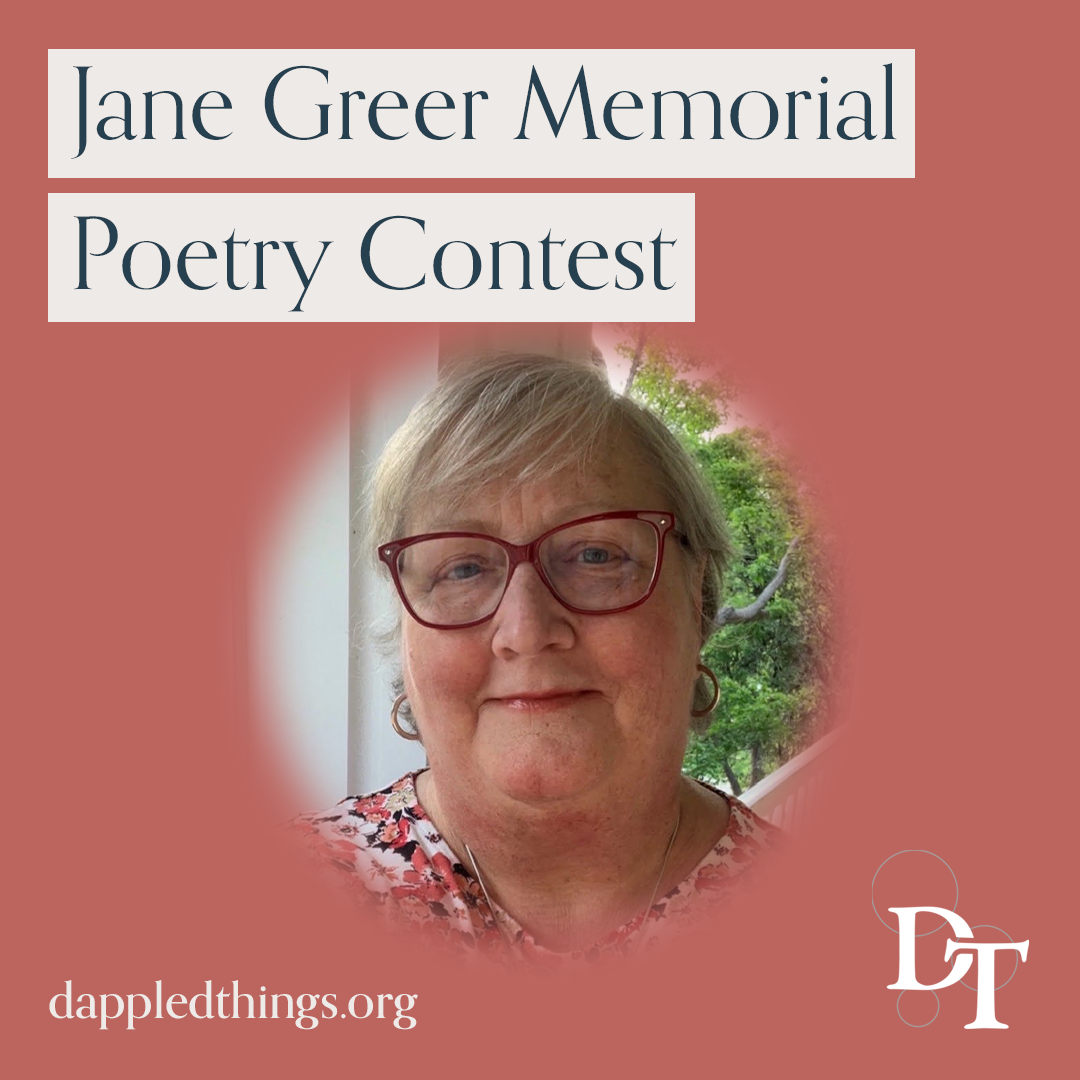
On July 22, 2025, the American Catholic community lost one of its most celebrated poets. Jane Greer (or North Dakota Jane, as she was known online) was the founding editor of Plains Poetry Journal and the author of the poetry collections Bathsheba on the Third Day, Love like a Conflagration, and The World as We Know It Is Falling Away. Jane’s work was also published in the National Review, Modern Age, First Things, St. Austin Review, and elsewhere.
More importantly, Jane was a beloved friend. When her social media friends pooled their money to send funeral flowers, they ended up with several hundred dollars left over. Her friends asked themselves what Jane would have wanted them to do with the funds, and supporting fellow poets was the obvious answer.
Thanks to the generosity of the Catholic literary community, and with the blessing of Jane’s family, Dappled Things announces the winners of the 2026 Jane Greer Memorial Poetry Contest, for the best poems submitted to the journal this year. These poems will appear in our 2026 Saints Peter and Paul issue.
The winners are:
First Place: Saint Anthony of Padua Speaks to the Fish by Dale Phillips
This poem swept us away: from the enjambments, as if we were fish pausing for a second to listen to the poem, to the language—direct, accessible, beautiful (“the vertigo of choice”). We especially loved its sense of mystery and wandering, again emphasized in its enjambments (“I do not know what I am saying / when I say the soul—I only know / it surfaces sometimes and sometimes / refuses to”). It invites readers to sit there listening to its homily, gaining some small wisdom from its lines.
Second Place: Unspring by Forester McClatchey
The language and musical sounds here were wonderful. The opening line (“Someone tell the trees: enough’s enough”) is at once poignant and funny, and like the best formal poems, its form was subtle, never interfering with its message but amplifying it, and it has such a beautiful closing couplet that demands silence—and then ends with that same sense of quiet.
Third Place: St. Antoninus by Billy Critchley-Menor, SJ
We loved the way this poem interwove the ordinary with the extraordinary, how it begins matter-of-fact (“I made a pilgrimage to the church where my grandfather was baptized”) before moving immediately toward the reflective: “What good it did, I do not know.” The poem captures ordinary life with sensitivity and rich, warm empathy.
Thank you to all who submitted! May Jane’s soul and all the souls of the faithful departed, through the mercy of God, rest in peace. Amen.

