Catholic Evangelists of the Beat Generation
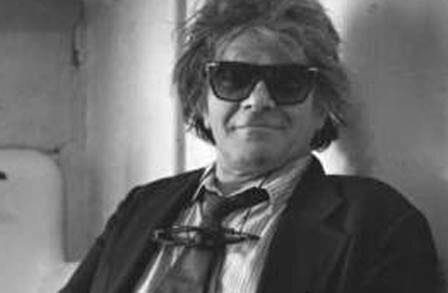
Gregory Corso
The deceased writers and poets of the so-called Beat Generation are enjoying a renaissance of sorts. While they and their work flourished in the 1950s and 60s, many, including Jack Kerouac and Allen Ginsberg, were born in the 1920s; hence, a few birth anniversaries have spawned several celebrations, newly published biographies, and an abundance of memorial essays.
It was a generation of literati like no other, successor to the Lost Generation of Hemingway and Fitzgerald. In addition to Kerouac and Ginsberg, William S. Burroughs and Gregory Corso are considered among the first of the Beat writers. Then, as now, not all considered their work “literature.” Truman Capote, for one, famously said Kerouac’s prose was “just typing.” Legions are the detractors who rank the Beats as irreverent, reckless, rebellious, and as shown by their bohemian lifestyle, hostile to civilization—by implication, then, irreligious.
That stereotype is unfair, and a few contemporary writers have looked to dispel the image by drawing to the fore tidbits of spirituality found in the prose and poems of the Beats. But that approach often tends to foster the “spiritual not religious’’ narrative. One should look beyond the novels and poetry collections.
‘Tis better, methinks, to go deeper, to go beyond the literature. It is better to discover the conscious found in personal letters, autobiographical essays, and stories of credible witnesses to discover any seeds of holiness. There are such kernels of sanctity found in the record of the two Catholics among the four founders—Kerouac and Corso, a surrealist poet. Kerouac is credited with coining the expression “Beat Generation” and Corso, who died in 2001 at age 71, is often referred to as “The Last of the Beats.”
Both were cradle Catholics and left this life marked with the sign of faith. Their lives, flawed like our own, are an open book and their unconventional lifestyles a well-known public record. Less known and often ignored or set aside is their love of Christ. Indeed, a case could be made that both were evangelists—Beat evangelists.
There are many anecdotes to support this claim; a few here will suffice.
Corso, baptized Nuncio (he took Gregory as his confirmation name), had an extraordinarily difficult childhood. Born with teenage parents, his care was soon entrusted to charity agencies, leading to many years in foster homes and eventually to roaming the streets and rooftops of New York City as a homeless teenager in the 1940s. Throughout his wandering teen years, he kept one piece of paper in his back pocket—his baptismal certificate, suggesting how much he longed to honor the call to be priest, prophet, and king. He lost the certificate while homeless and lamented the loss in a letter to Kerouac, writing, “I remember when I lost my baptismal certificate, I was sixteen, and I always kept it in my back pocket, it was soiled and worn and its folds were torn, that was because I slept on rooftops and in cellars and had dirty pants … for a long time I felt bad about losing my baptismal certificate, it was the only thing that really meant something to me I guess.”
Perhaps, to soothe the pain of that loss he began to wear a silver crucifix—a crucifix that would one day earn national attention, leading to an evangelizing essay by Kerouac. The saga of the crucifix began one morning in 1958 as a nervous Jack Kerouac, uncomfortable with the wave of fame from the recent publication of his groundbreaking novel, On the Road, was preparing for an interview with a major national magazine. Early in the day he met Corso in a coffee shop where he shared his fear. To calm his anxious friend, Corso removed the silver crucifix from his own neck and handed it to an appreciative Kerouac who wore it on the outside of his shirt for the rest of the day. During the interview photographs were taken. One photo soon appeared in several magazines and newspapers across the country—all but one publication erased the crucifix from the photo.

Kerouac later wrote “God bless the New York Times for not erasing the crucifix from my picture as though it was something distasteful. As a matter of fact, who’s really beat around here, I mean if you want to talk of Beat as ‘beat down’ the people who erased the crucifix are really the ‘beat down’ ones and not the New York Times, myself, and Gregory Corso, the poet. I am not ashamed to wear the crucifix of my Lord. It is because I am Beat, that is, I believe in beatitude and that God so loved the world that he gave his only begotten son to it. You people who don’t believe in God, you’re all big smart know-it-all Marxists and Freudians.” His handling of the episode was extraordinary, especially given that he wrote that in an essay published in the June 1959 issue of Playboy, a magazine having a monthly print run of one million copies at the time.
That same year Corso visited Rome and in a letter to literary agent Max Gartenberg complained about the size of a “huge crucifix” near the coliseum. After signing the letter, he had an attack of conscious and added a brief postscript, “But I love the crucifix.”
Corso, often in his correspondence, shows a concern for the spiritual welfare of his friends, even looking to admonish. In one letter he was concerned about Kerouac’s interest in Buddhist philosophy, writing, “Jack and Zen are good, but I’d much rather Jack and Catholicism; less ego involved.” Eventually, Kerouac gave up the study of Zen.
One should consider the witness of the late Father Armand Morrisette, a Lowell, Massachusetts priest. As a teenager in the mid-to-late 1930s, Kerouac often confided in Father Morissette; three decades later Father Morissette presided at Kerouac’s Requiem Mass. In 1986, in a speech to the American Citizens Club of Lowell Father Morissette noted, “Many people, priests unfortunately, did bad publicity for Kerouac; they said he was a good-for-nothing, even depraved. Some priests said: ‘You know, your Jack Kerouac, he was no angel!’ So, I said: ‘No, but he was a saint.”
Father Morissette recalled Jack “loved mysterious things, miraculous things. He spent hours sitting in churches looking at the crucifix, the statues … he was always very religious … and he really liked Jesus Christ. He was sincere. He wanted to imitate Christ, meaning to love everybody and do good unto everyone, like it says in the Beatitudes. That is what he meant.”
Indeed, Kerouac found his own meaning for the term “Beat” one rainy afternoon while sitting in Lowell’s Saint Jeanne d’Arc Church. He recorded the episode in his journal and recalled sitting alone in the church with flickering candles when he came to the understanding that the word “Beat” was meant to mean “beatitude.”
Corso and Kerouac, Beat Generation writers, led imperfect lives, struggled, suffered, fought off temptations while succumbing to others—they were human; but each, in his own way, did his best to share the Gospel and share it joyfully. They were Beats—and they were evangelists.
James K. Hanna is a historian, essayist, and the author of The Remarkable Life of Bishop Bonaventure Broderick: Exile, Redemption, and a Gas Station (Serif Press, 2022).