
Friday Links
February 20, 2026
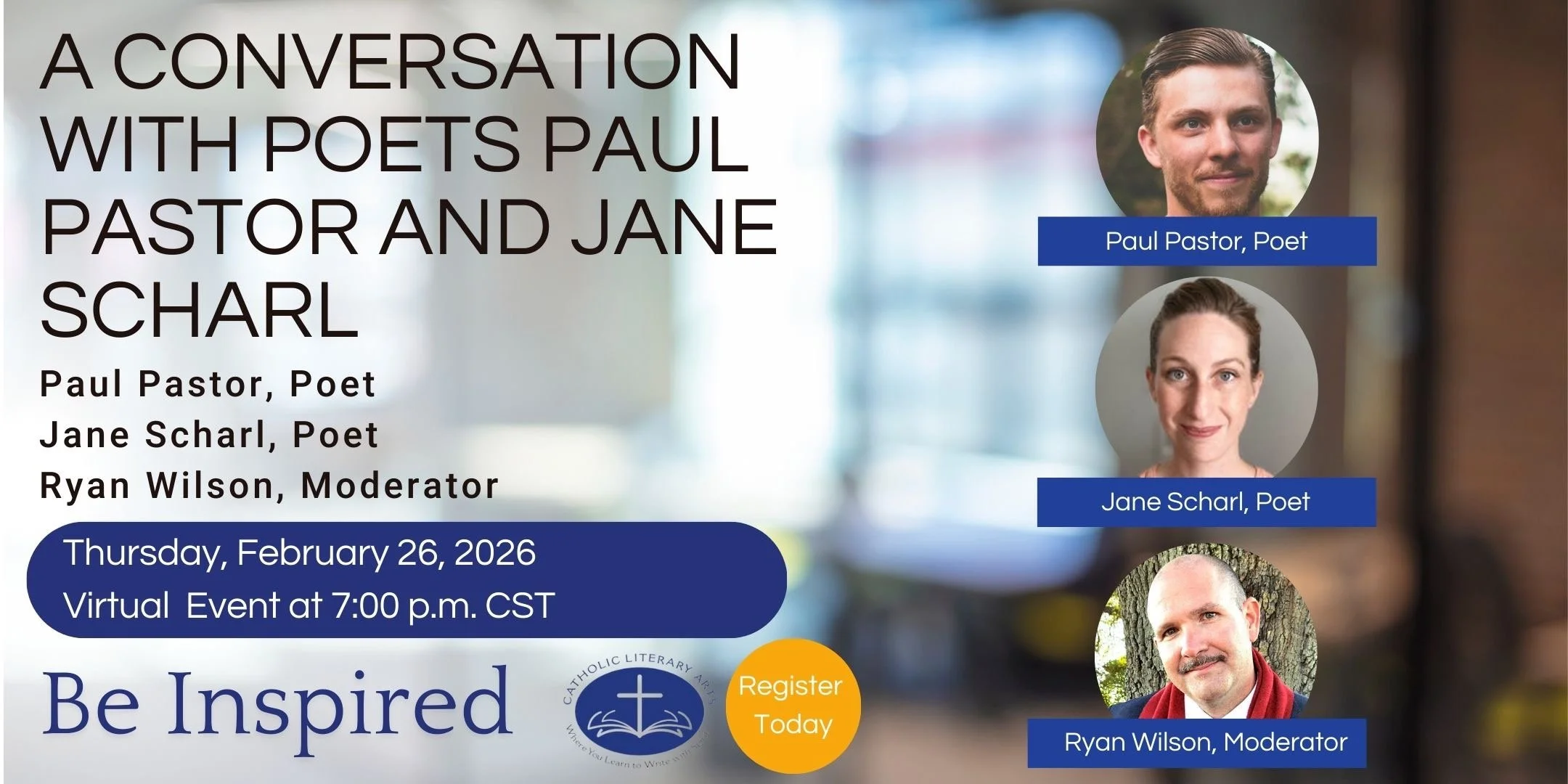
Ryan Wilson in Conversation with J.C. Scharl and Paul Pastor
T. S. Eliot: “Ash Wednesday”
Trinity in Aquinas: Psychological Analogy as Social Analogy with Michael J. Higgins
The Conservative Christian Literary Ecosystem
“Snowdrops”
Benedict XVI on Science, Philosophy, & Faith
Ryan Wilson in Conversation with J.C. Scharl and Paul Pastor
I promise you this will be good! All three of these writers have something important to share with us about life, God, and art. More in HERE.
T. S. Eliot: “Ash Wednesday”
Perennial listen. Do you have soup to stir today? Listen while you stir.
Trinity in Aquinas: Psychological Analogy as Social Analogy with Michael J. Higgins
In this episode of the Spe Salvi Institute podcast, Andrew Petiprin and Bobby Mixa welcome Dr. Michael Joseph Higgins, Professor of Humanities at St. Jerome Institute and author of the groundbreaking new book Giving One’s Word: Psychological Analogy as Social Analogy in Aquinas's Trinitarian Theology (Catholic University of America Press, 2025).
Contemporary Trinitarian theology often emphasizes that to believe in the Trinity is to believe God is Love: three divine Persons who eternally know, love, and give themselves to one another in perfect communion. Yet St. Thomas Aquinas—whose theology centers on the immanent processions of Word and Love within the divine essence—is rarely seen as a champion of this "social" vision. Many assume his famous "psychological analogy" (drawn from human acts of knowing and loving) prioritizes divine unity over personal distinction, self-knowledge over interpersonal knowledge, and self-love over mutual self-giving—making it seemingly incompatible with, or at least in need of supplementation by, a more relational or social framework.
Dr. Higgins challenges these assumptions head-on. Drawing from a close, creative reading of Aquinas's texts, he demonstrates that the psychological analogy is inherently interpersonal and social at its core. Far from shutting out the reality of mutual love and self-donation among the Persons, Aquinas's framework ensures that perfect self-knowledge and self-love in God are inseparable from interpersonal knowledge, interpersonal love, and radical self-giving. The distinction of Persons is as fundamental as unity, and the "Word" generation and spiration of Love reveal a Trinity of interpersonal communion—no external social analogy required.
The Conservative Christian Literary Ecosystem
With regard to the declining interest in book reviews, I wonder if the approach taken to much literature feels less about constructively contributing to a broader literary culture and more about tearing down the work of others. Editors do have a distinct responsibility to stretch their readers’ tastes at times by presenting them with a variety of perspectives, both familiar and novel. But there is also a degree of trust in the balance, as readers expect a magazine to contribute to the discourse in ways that are both interesting—presenting new ideas and interpretations—but also responsible by not following the latest fad too closely. A books section that does not provide what the reader has been hoping for has, in some cases, only itself to blame for not understanding the readers’ needs and thus becoming irrelevant. This matters, because most magazines are, to a great extent, reader-supported publications. Readers vote with their feet—and their wallets.
“Snowdrops”
I’m done with winter and especially snow, though apparently neither are done with me. Here’s a poem from Carla Galdo to remind that yes, this too shall end.
Benedict XVI on Science, Philosophy, & Faith
Ratzinger’s point was succinct and fundamental. A science without a deeper understanding of rationality than what is available from modern natural or social scientific method is in danger of being rejected by human beings who know that there is more in heaven and earth than is dreamt of in the modern scientific project. One might say that the fact that there is a heaven is the most important fact. The end result of a false understanding of reason is two-fold: 1) encouraging the pathologies of faith and reason he described, which might be characterized by irrationality and violence in religious groups as well as in modern secular groups; and 2) an inability to work toward a dialogue among world cultures, most of which understand that cutting off the question of the divine from the rational is “an attack on their most profound convictions.” This truncated “reason” rightly inspires suspicion—and undercuts any claims of science built on this incomplete and fundamentally amoral foundation.
