What Hides Inside a Body
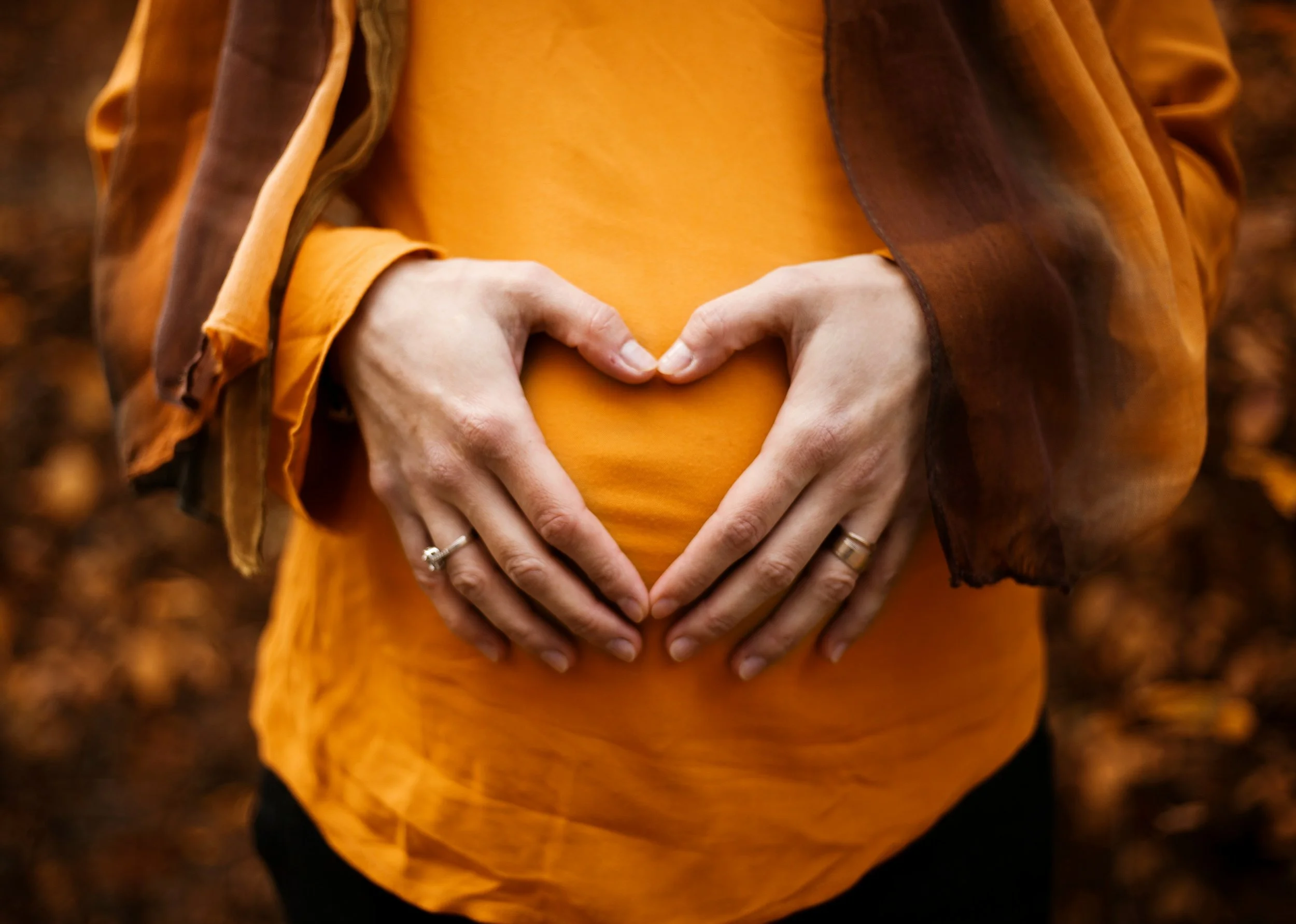
Photo by Alicia Petresc on Unsplash
Two lines appear on the test. I’m pregnant again.
My firstborn is fourteen months old. He cries if I take him inside any building—the grocery store, the library, or anywhere. He prefers to live inside the wind. I don’t yet suspect that he has autism, but I know that something is different. In these days of heaviness—both emotional and physical, as my body grows alongside another’s—eating food is a comforting ritual.
I show up for a routine prenatal appointment. My gynecologist asks about my diet. I mention drive-thru decaf lattes. Her face twists with concern. I decide to omit my blueberry scone order.
“You’re getting those lattes with skim milk, I hope?” she asks. “And a sugar substitute?”
I shake my head. She grimaces.
My mind wanders, instead, to Luke Crawson’s assessment of me, circa 1998. I’m standing in line for a church fellowship lunch. I skip the casseroles and fill my plate with nothing but corn muffins. Then, I slide into an empty chair.
“You’re ugly,” Luke Crawson deadpans—nary a word of greeting.
My friends, Morgan and Jennie, turn to face each other in shock. Then, they both laugh. Luke laughs, too—his bowl cut shimmying with each guffaw.
Outraged, I stand up and shove my chair against the folding table. I storm out of the fellowship hall, leaving my plate of corn muffins behind. I know I’m bigger than Morgan and Jennie—twig-thin girls who take gymnastics after school. Maybe that’s why I’m ugly. I’m not the kind of girl who rolls herself into a ball on a gym mat. I’m the kind of girl who maxes out my library card on Nancy Drew mysteries and pretends the family Pomeranian is my long-lost brother. Maybe I should stop eating.
Of course, I’ll need a parent-approved reason for my sudden shift in habits. I announce to my family that I am now a vegetarian. That proclamation alone spares me a great many dishes on my mother’s Tennessee table. Still, I’m not losing weight fast enough for my liking—so, I begin to hide food. At family meals, I perfect the art of moving food into paper napkins, morsel by morsel. When the napkin in my lap fills up, I throw it away and grab another. I repeat this action, sometimes two or three times per meal, until my plate is clean.
By way of coping with my gnawing hunger, I drink sodas day and night. Soda calories are now my sole source of nourishment. As far as I can tell, everything is going fine—until, one morning, I black out at the top of the stairs. My mother scrambles an egg and forces me to eat it. I push each bite through pursed lips, sobbing. She calls the doctor and makes an appointment for me that same day.
At the office, Dr. Winters motions for me to step onto his scale.
I am a mere ninety-five pounds.
My mother presses a hand to her chest, but I’m biting back a smile. This whole thing has been some kind of contest in my mind—and, in my calorie-starved mind, I’ve won.
Later, at my grandparents’ house, my mom slides a fast-food taco toward me.
“You heard what the doctor said.” Her tone is no-nonsense.
I roll my eyes and take a dramatic bite of taco. Satisfied, my mom heads for the living room. My grandfather watches me from his recliner for a few moments and then—as my mother begins to relay the doctor’s concerns to my grandmother—drifts toward the kitchen. Their voices echo down the hall:
“The doctor said she’s twenty-five pounds underweight.”
“Well, I thought she was looking a little thin, but I wouldn’t have guessed that much!”
Papa untwists a loaf of bread on the counter. Then—humming a tune, unknown to me—he scraps thick globs of peanut butter from a jar. Finally, he slides a knife over the slice, smoothing the globs into a single creamy layer.
“Mind if I sit here?” He drops his stooped frame onto a bar stool, then takes a big bite of his sandwich.
I finish my taco and ball the paper up.
Papa pulls a second taco from the bag. “Have another.”
I want another. I’m hungry. I haven’t eaten a substantial meal in so long. I unwrap the taco without protest, sinking my teeth into juicy meat and soft tortilla.
Years later, with a nonverbal toddler in tow, my coffee-shop usual is a blueberry scone and vanilla latte. That combination of flavors means safety. The taste of warm vanilla and sugar-dusted blueberries means that one more appointment—one more hour I’m informed of all the ways my son doesn’t measure up to a mysterious set of standards—is over.
Shortly after Milo’s autism diagnosis, I befriend the mother of a young boy. Like Milo, Peter is nonverbal, but—more than that—Peter can’t move. He rotates between the living-room couch and a custom high chair, designed for his eight-year-old body. In addition, he receives nutrition exclusively via feeding tube. My friend’s kitchen counters are perpetually littered with organic fruit and vegetable peels—food that her son will never chew or swallow, but food that she daily prepares for his feeding tube. Three times a day, Emily grieves the reality that her son will never taste his mother’s meals.
Knowing the complexities that surround the act of eating for so many—those living with disabilities, those living in poverty, and others—cures me, mostly, of the desire to under-eat or overeat. I learn the rightful place and purpose of food. I learn that peace is found in Christ and Christ alone. Food, in the end, is meant to sustain life.
In the end, the boy in the fellowship hall is wrong. Ugliness contorts the soul, not skin and bones. The beautiful one, to me, is the mother who spends her days preparing food that her child will never taste. She understands that what is hidden inside a body—what is secret—gives life.