
What a Surprise: There’s No Place Like Home
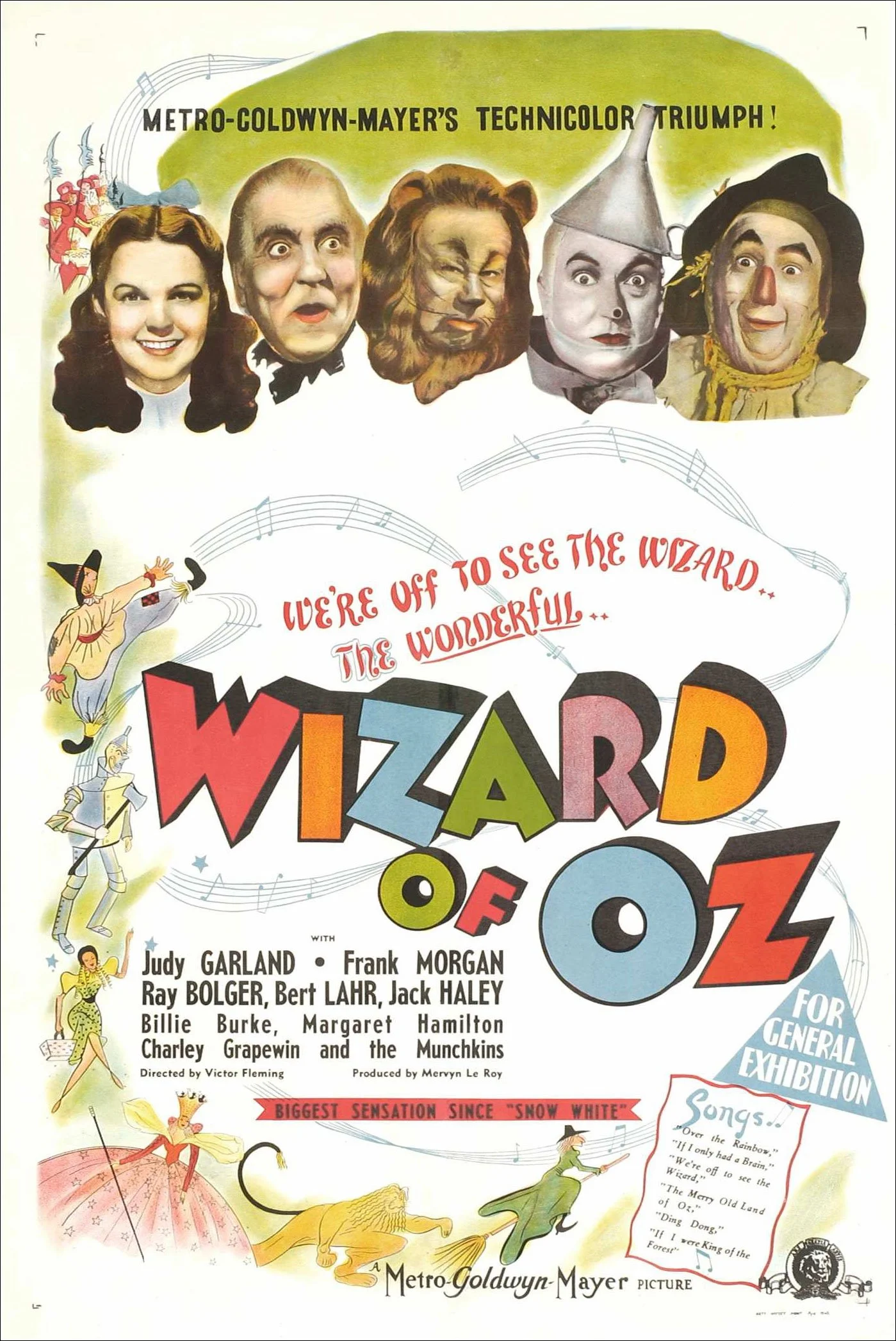
The Wizard of Oz is a movie that parents often enthusiastically pass down to their children. I remember my own parents gathering me, my younger brother, and two younger sisters into the living room of our small house on Homestead Air Force Base (mom and dad were flight mechanics). We four kids sat cross legged in front of our bulky 80’s television set, popcorn bowls within close reach while mom and dad sat above us on the couch, eagerly anticipating our initial reactions to the famous scenes. Like so many kids first experiencing The Wizard of Oz, we were mesmerized by the songs, induced to laughter by the comedy, and frightened by the villains, especially the wicked witch’s frightening green visage. We also absorbed the movie’s famous lines, like “We’re not in Kansas anymore,” its universal symbols, like the archetypal yellow brick road, and even its special aesthetic qualities: no child, for example, ever forgets his initial awe when Dorothy opens her front door, leaves the black-and-white world of Kansas, and enters the dazzling land of colorful Oz.
As I thought about this memory, however, I realized with regret that my current family has never sat down to watch Oz together. So, I decided to choose Oz as the next movie in my exploration of the Vatican’s 45 important films list. And I recruited my family to join me. However, my wife and teenage son had to cancel our movie date at the last minute. That left me and my nine-year-old daughter, the only one yet to actually see the movie. Well, I figured I could watch the movie fresh through her eyes, not unlike what my parents did through me and my siblings’ eyes all those years ago on the Air Force Base. And even though she had a slight fever when we sat down to watch the movie, she was excited. I laid her on the couch next to me, wrapped her in blankets, and placed an extra pillow under her head to make her more comfortable. Unsurprisingly, my daughter laughed at the funny moments and gripped my arm during the scary ones. We both appreciated the surreal quality of the tornado scenes—scenes that seem more frightening to me somehow than the CGI tornado scenes of today’s Twister franchise. My daughter also cheered on Toto throughout the movie, and not just because he’s a tiny cute dog, but because he plays a more important role to the plot than I remembered. And aesthetically, I appreciated the excitement produced by the movie’s creative mise-en-scene. For instance, even when the camera is stagnant, the actors’ constant ebullient motion, especially in the land of Oz, produces a visceral energy for the viewer.
Anyway, I wish I could say that I gleaned new insight from my daughter’s perspective, but the two of us actually just got wrapped up in the movie’s entertaining story, a story I know most are familiar with. But I did notice one thing about the story’s ending that I had overlooked all the other times I had seen it, an insight that made me wish I had waited to watch the movie with my wife and son too.
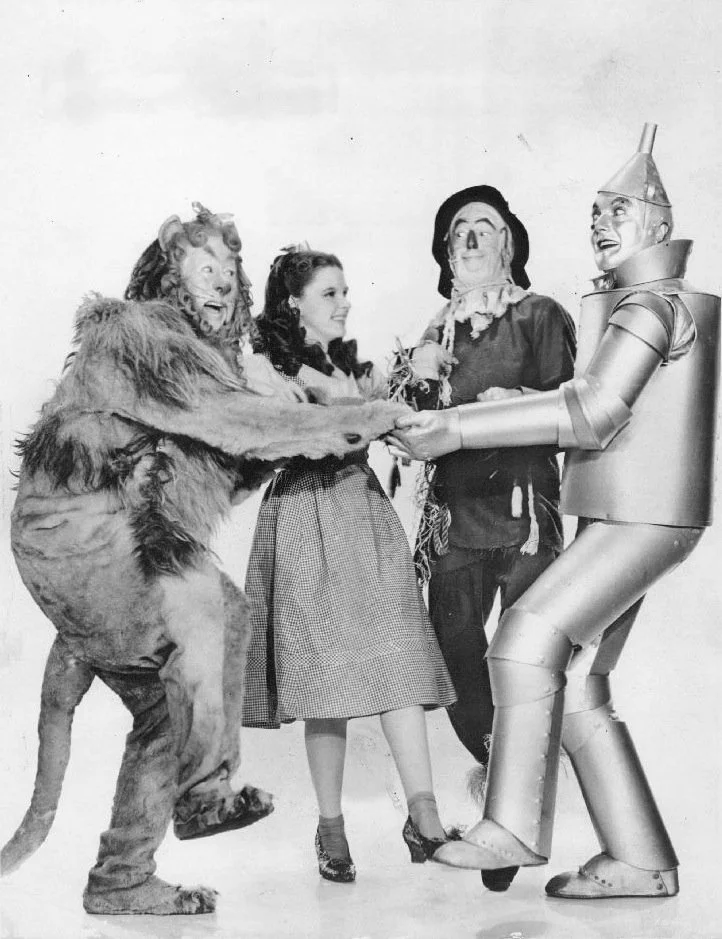

A famous scene from the movie’s exposition sets up the importance of the movie’s ending. After coming to believe, as teenagers commonly do, that nobody understands her, Dorothy (Judy Garland) sings an idealistic song of longing: “Somewhere Over the Rainbow.” Obviously it’s an iconic moment in film history, a song still known by many today. In fact, current pop singer and actress Ariana Grande sang the song at the 97th Oscars and performs it at many of her concerts, a testament to the tune’s enduring appeal. But besides the beautiful melody, why does the song continue to resonate for so many? Well, for me, one possible answer can be uncovered by viewing the question through a Christian anthropological lens. For instance, as created creatures, human beings can only achieve happiness by finding rest in their Creator. But instead, people commonly seek happiness through other created creatures or the standard pursuits of wealth, fame, or pleasure, pursuits that often leave people feeling empty after acquisition. Why? Well, the Christian answer is famously stated by Saint Augustine: “You have made us for yourself, and our heart is restless until it rests in you.” The “you,” of course, being the Creator. Watching Dorothy sing “Somewhere Over the Rainbow” with my daughter, it struck me that the song creates an ache within us, an ache that softly wounds that restless part of our hearts that Augustine speaks of. The song evokes in us our freedom of will, our freedom to do something else, go somewhere else, be somebody else, transform our real or imagined drudgery into something more romantic. Don’t believe me? Listen to the song again and ask yourself why you are still so moved by it.
To the viewer’s great delight, of course, the movie immediately grants Dorothy her desire. Dull Kansas becomes kaleidoscopic Oz. However, I was surprised at how little I remembered of the movie’s denouement. The scenes of Dorothy and the gang dealing with the underhanded Oz seemed fresh to me, and Dorothy’s increasingly despairing hopes of returning home resonated with me more than ever. Of course, I am older now. Perhaps a little wiser. When you are young and your desires seem infinite and obtainable, you aren’t likely to dream of a happy life living at home with family. But that is, interestingly enough for me, what the final scene of the movie stresses.
Back in black-and-white Kansas, Dorothy awakes from her feverish romantic dream (the wet towel Aunty Em places on Dorothy’s head for healing is a nice touch) and wildly proclaims how happy she is to be home. I started thinking about contemporary family movies. To be sure, some exist that stress the importance of family—-Finding Nemo comes to mind—-but a lot of the other family movies place more stress on the individuality that “Somewhere Over the Rainbow” so powerfully evokes. Just the other week, for example, I watched the 2023 movie Wish with my daughter, a movie that literally concludes with the idea that everyone should individually be granted whatever it is they wish for. Nothing wrong with wishes, of course, but our culture tends to limit happiness to just the ability to achieve whatever worldly wish we individually desire at any given moment.
The Wizard of Oz, on the other hand, tells the viewer that these desires and wishes do not always lead to happiness. Dorothy learns that lesson, even if many of us, as I did for many years, choose to ignore the lesson the movie teaches. My daughter and I had a good talk about this message and about the difference between Oz’s message and the recent message of Wish. And I realized that I should have watched the movie with the whole family, something my wife and I want to remedy soon.
Perhaps the cynic out there will say that I am overlooking the era that Oz was made. It’s a depression-era studio movie, and the director and producers and artists had to collaborate on a movie that would sell more to families in a conservative time period, etc. Maybe. Perhaps the issue is more with me. Maybe I am guilty of overlooking the core message of the movie, a message many others take in right away. I am the problem because my individualistic heart was, for too long, taken in with messages like "Somewhere Over the Rainbow” instead of better, deeper messages. Perhaps. I admit that I was far too restless and searching during my youth and my twenties, which is why Augustine’s Confessions resonates with me so much.
But regardless of circumstance, as a current father and husband, I appreciate the movie for stressing the importance of home and family. In fact, after the tornado drops Dorothy in Oz, The Good Witch of the North has to explain to the Munchkins who Dorothy is and where she comes from. The Good Witch’s words remind us that life’s magic doesn’t have to be sought over the rainbow, but can be found much closer to home: “She fell from the sky, and Kansas is the name of the star.”

