The Stories Are True
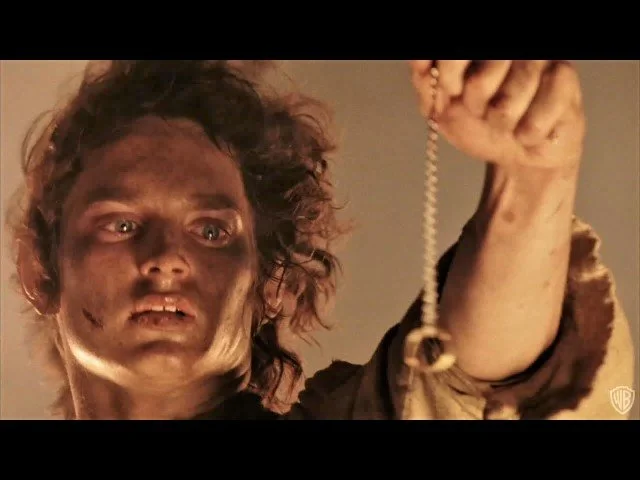
In my first year at Redeemer University, I was surprised by the number of professors referencing The Lord of the Rings and the rest of Tolkien’s works in their lectures—whether I was in a literature class, a history class, or a theology class. To the shock of my classmates, I had never read The Lord of the Rings before, so I decided to start the series. It was quite an endeavour on top of my reading for school, and I was often overwhelmed by the detail of the world-building and the fictional histories. What stood out to me the most, though, was how beauty shone through it all, even in the darkest parts of the quest— how “oft hope is born, when all is forlorn.”1The Lord of the Rings is the standard to which every fantasy story nowadays is compared, and for good reason. Perhaps even more so, it is the shining example of a fantasy story written by a Christian, making Tolkien a major influence for many Christian storytellers.
The Wingfeather Saga by Andrew Peterson is one such story. I discovered this middle-grade fantasy series through social media shortly after finishing The Lord of the Rings and I put it on my reading list for the summer. The four books follow the Wingfeather family: Janner, Kalmar, and Leeli, their mother, Nia, and their grandfather, Podo, as the children discover their family’s greatest secret: they are heirs to the fabled Shining Isle of Anneira, believed to have been destroyed when Gnag the Nameless and his army of monstrous Fangs took over the land of Aerwiar.2
From the start of the first book, the parallels to The Lord of the Rings are hard to miss. Like Tolkien’s epic, the first book, On The Edge of the Dark Sea of Darkness, begins with several introductions — except instead of titles like “Concerning Hobbits,” “of the Finding of the Ring,” and “Note on The Shire Records,”3 the introductions are “A Brief Introduction to the World of Aerwiar, “A Slightly Less Brief Introduction to the Land of Skree,” and “An Introduction to the Igiby Cottage (Very Brief).”4 In contrast to the serious depth of history in J.R.R. Tolkien’s footnotes, Andrew Peterson’s footnotes are tongue-in-cheek, full of wordplay, gibberish, summaries of books such as “We Played, We Bled, We Swept by Vintch Trizbeck”5 and details on “the squishy, flootchy feeling” of being attacked by a bumpy digtoad.6 Aerwiar is a wonderful, whimsical homage to the rather imposing world of Middle-Earth, and in many ways, reading it as a lifelong lover of children’s literature, it felt like The Lord of The Rings in my favourite. However, the parallels between The Lord of the Rings and The Wingfeather Saga go much deeper than the broad strokes of fantasy elements and delve into themes deeply rooted in the authors’ Christian identities.
One of the great questions that Christian fiction authors have to ask is how to point toward the Gospel in their work without necessarily being explicitly faith-based, “for Christians only,” or preachy. Certainly one way is through the values of the story: of hope, love, truth, beauty, and light overcoming darkness. However, a more subtle and mysterious answer lies in Tolkien’s value of the arts and his concepts of subcreation and eucatastrophe.
Perhaps the most unexpected parallel between The Lord of the Rings and The Wingfeather Saga is the significance of the arts: in both, the power of lyrical storytelling forms a kind of magic that weaves together longing, grief, joy, and hope. Tolkien regularly inserts lyrical interludes throughout his stories. At first, while reading The Lord of the Rings, I often found the songs and poems superfluous in an already enormous book, but I came to appreciate their surprisingly necessary role. Many of the songs give glimpses into Middle-Earth’s history as they are a way that characters remember the past and preserve their culture, such as Gimli’s song about the history of Moria.7 Other poems are playful and “nonsense, maybe,” to quote Sam after he recited his oliphaunt poem for Frodo and Gollum, but those rhymes brought light and laughter in the midst of their struggles. Poetry and art are not an extravagance only fit for times of peace in Middle-Earth, but an essential way for characters to understand their world and find joy and light in dark times. Though the tales of Middle-Earth are described as equally fair and sad, they have an almost magical power to lift the characters’ spirits—8 and music is powerful indeed in that world, as it was central to the creation of Middle-Earth as told in The Silmarillion.9
Likewise, The Wingfeather Saga has a deep respect for the power of song, story, and art, first seen in the song of the mysterious sea dragons whose song gave listeners a feeling “like homesickness” even when one had never left home.10 The mysterious transcendence of creative work shows itself throughout the rest of the series as Nia teaches her children the traditional Anneiran T.H.A.G.S., “Three Honored and Great Subjects: Word, Form, and Song.”11 Each Wingfeather child specializes in a different one: Janner in Word (writing), Kalmar in Form (visual arts), and Leeli in Song (music). While “not one other child in Glipwood”12 studied T.H.A.G.S and the rest of Aerwiar had largely ignored the arts amidst the occupation of the Fangs, Nia kept the spark of Anneira alive through teaching her children.
The music Leeli plays on her whistleharp has magic which changes the course of battles and connects her with her brothers even when they are separated. Kalmar’s artistic eye enables him to see things no one around him notices and gives him powerful visions. When Kalmar is transformed into a Fang, the stories Janner tells to him remind him of his identity “call him home” in his darkest moments, “like lampposts along the pathway, guiding his course.”13 Rather than some kind of ultimate weapon, the arts in T.H.A.G.S. are the “ancient power” the Wingfeather family holds which ultimately is able to “destroy the Nameless One and restore Anniera to its glory,”14 not through violence but through sacrifice and love. The arts and the act of creating beauty are what show characters’ humanity in the midst of war and conflict.
When they read about that beauty, many people claim they would love to adventure through Middle-Earth. However, they would likely second-guess their decision when they have barely had anything to eat or drink for days because they lost their packs when attacked by an army of orcs. The world of Aerwiar in The Wingfeather Saga similarly looks beautiful when you look at it from a bird’s eye, literary view, but in reality, it is filled with monsters and characters of questionable motives, not to mention the destructive rule of Gnag the Nameless.
Why, then, do people long to live in worlds like Middle-Earth or Aerwiar if they are just as broken as the world we live in? Tolkien believes it is because no magic is more potent and powerful than storytelling. When we engage in creating our own fantasy worlds, we become sub-creators, and, when successful in creating a world with both continuity and truth to it, readers’ minds are transported into that secondary world.15 In a scientific, objective fact-driven Western culture where spiritual experiences are dismissed and artificial intelligence is used as an easy shortcut to years of hard work of training in the arts, Christians should be the first ones to stand up for the value of beauty and creating. Fantasy does not simply exist as vain escapism or mere entertainment as some might claim, but instead is an element of being made in the image of God. While fantasy can be used to distort truth or distract people from reality, anything in this fallen world can be used to harm or to numb pain, so Tolkien asserts, “Fantasy remains a human right: we make in our measure and in our derivative mode, because we are made: and not only made, but made in the image and likeness of a Maker.”16
Andrew Peterson expands on Tolkien’s view of subcreation, writing,
Half the reason we read and reread the Lord of the Rings series is thanks to the vividness of Middle-earth. It reads like history, and the feeling that it all might have actually happened is part of the delight. Tolkien believed that the building of imaginary worlds is one of our highest callings as image-bearing children of God, and he bore that image well.17
We read and love fantasy stories because there is something in them that we long for: not the act of the perilous quest itself, but for being part of a story bigger than ourselves and the knowledge that we are part of a quest that changes our world. Sam in The Two Towers has a very memorable realization of the truth that he had “fallen into” a story, the same “great tales” that would be read generations later.18 He used to think adventures “were things the wonderful folk of the stories went out and looked for, because they wanted them, because they were exciting and life was a bit dull.. But that’s not the way of it with the tales that really mattered, or the ones that stay in the mind. Folk seem to have been just landed in them.”19
Sam realized the characters in adventures he admired were ordinary people after all, and he was one of them. Frodo noted that “to hear [Sam] somehow made [him] as merry as if the story was already written,” even as they were “still stuck in the worst places of the story.”20
Oskar, the bookseller in The Wingfeather Saga, had a similar experience to Sam. Like many fans of fantasy, Oskar built his life around the stories he loved, quoting his favourite authors constantly and turning his passion for books into a career. He said the following while recalling his adventure so far with the Wingfeather family:
All my life I’ve wanted to believe the stories are true. I’ve never been able to quiet the pleasurable ache between my heart and my stomach that I felt as a boy when I read those tales. And now that I am wrapped up in the Wingfeather saga, that ache has grown so that I can hardly bear it.21
Oskar most certainly was not the most skilled adventurer, but realizing “the old stories are true after all”22 gave him a unique optimism through the challenges he faced, and he looked forward to writing down the stories he found himself in so he could share them with others.
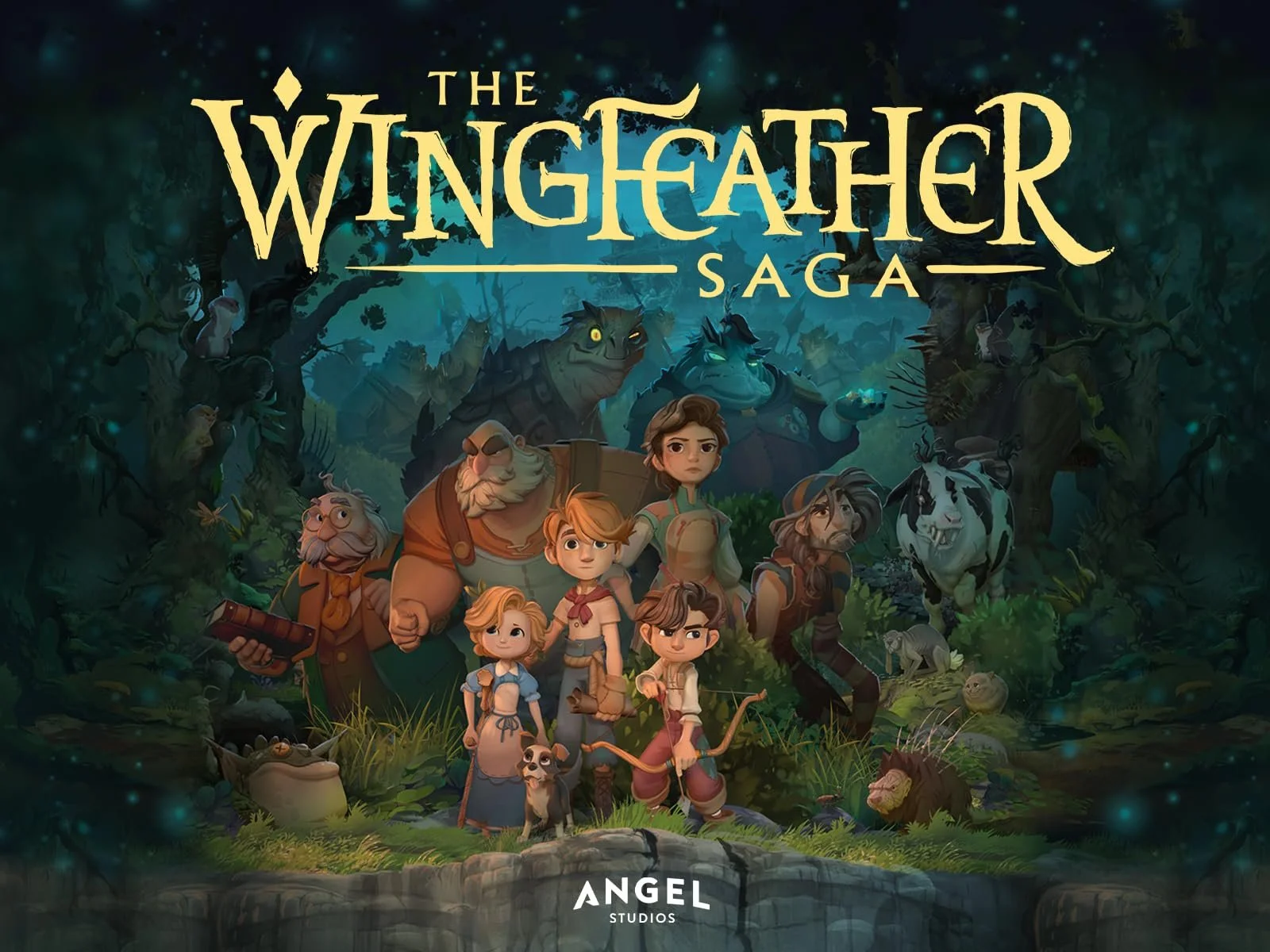
Janner had a yet another similar moment of realization in one of the darkest parts of his journey: when he was alone in the depths under Gnag’s castle, separated from his family:
He remembered old tales, stories about self-sacrifice and the way a single, beautiful act done for the sake of another could shine out across the dark of the ages like a breaking dawn. When he was little, he and Kal had made swords out of sticks and defeated dragons, Fangs, and other villains, and Janner had lain awake in his bed at the Igiby cottage, yearning to be one of those heroes. Maybe now the Maker was just giving him what he wanted. Maybe the Maker was answering the prayer of his little boy heart by leading him here and giving him the chance to live one of those stories.23
When characters in the worlds created by Tolkien and Andrew Peterson glimpse the greater narrative they are part of, it helps them find hope in the darkest times of their journeys. The idea of “happily ever after” might be a myth to much of the world, but Christians know happy endings do exist: no matter how difficult the troubles we face in our lives on earth, we have hope knowing our King will restore and renew His Creation in the end. Creation will be better for the story it has been through, and we have that hope shining through whatever darkness we might face.
That concept of a “turn” at the end of a story towards the good, no matter how “fantastic or terrible the adventures” or how great the tragedies that led up to it,24 is what Tolkien calls eucatastrophe. He believes that every fantasy’s eucatastrophe is a “far-off gleam or echo of [the gospel] in the real world.”25 The Biblical Story is the ultimate example of eucatastrophe: the death and resurrection of Jesus Christ.

We see Tolkien use eucatastrophe in The Lord of the Rings, with the sudden arrival of the eagles saving Sam and Frodo on Mount Doom. And we see it in The Wingfeather Saga through many incidents where “evil digs a pit, and the Maker makes a well,”26 such as the miraculous discovery of the fabled Miller’s Bridge when the Wingfeather family was looking for a way to cross a river. The darkness is transformed into greater beauty than was there before—most of all in the final book, The Warden and the Wolf King, where Janner sacrifices his life to save people who had been transformed by Gnag into Fangs.
It is a bold conclusion to a series, especially for children’s literature, where many expect endings to be clean and clear, not bittersweet and open-ended. However, Andrew Peterson refuses to write any more about the Wingfeathers after the events of the final book. In the 2016 short story anthology, Wingfeather Tales, he wrote a defense of his ending:
If you’re asking me whether I’ll write about what happened after the epilogue of The Warden and the Wolf King, the answer is a definite no. The canon is closed. I have my reasons, some of which are literary and some of which are theological, and they boil down to this: whatever hope or longing might have woken in you when you finished the book is far better than anything I might have written.27
Fantasy is essential because it gives us a bigger perspective. Even when we put down a pencil or turn the last page, the story is never finished. Hope of what comes next is better than anything we can write. Christian authors have a unique role in creating fantasy because we know the bigger story we are part of: the metanarrative of God’s creation. We have hope for the future, peace and forgiveness for our past, and purpose in the present. We are part of a story that is more wild and beautiful than our minds can fathom, and that should fill us with a thrill of excitement to share what we have discovered with others. When others experience the transcendent joy of beauty and eucatastrophe and wish they could live in a fantasy world we can tell them that what they long for is only an echo of God’s story ringing through all our world.
1 J. R. R. Tolkien, The Return of the King, The Lord of the Rings, part 3 (1955; reis., London: HarperCollins, 1994), 176.
2Andrew Peterson, On The Edge of the Dark Sea of Darkness, The Wingfeather Saga, book 1 (2008; reis., Colorado Springs: Waterbrook, 2020), 1.
3J. R. R. Tolkien, The Fellowship of the Ring, The Lord of the Rings, part 1 (1954; reis., London: HarperCollins, 1994), 1-21.
4Peterson, Dark Sea, 1-5.
5Peterson, Dark Sea, 13.
6Peterson, Dark Sea, 184.
7Tolkien, The Fellowship, 414.
8Tolkien, The Fellowship, 252.
9J. R. R. Tolkien, The Silmarillion (1977; reis., London: HarperCollins, 1990).
10Peterson, Dark Sea, 52.
11Peterson, Dark Sea, 78.
12Peterson, Dark Sea, 78.
13Peterson, Warden and the Wolf King, 81.
14Peterson, Dark Sea, 130.
15J. R. R. Tolkien, Verlyn Flieger, and Douglas A. Anderson, Tolkien on Fairy-Stories, expanded ed., with commentary and notes (2008; London: HarperCollins), http://catalog.hathitrust.org/api/volumes/oclc/175283598.html.
16Tolkien, on Fairy-Stories, http://catalog.hathitrust.org/api/volumes/oclc/175283598.html.
17Andrew Peterson, Wingfeather Tales: Seven Thrilling Stories from the World of Aerwiar (2016; reis., Colorado Springs: Waterbrook, 2021), xi.
18J. R. R. Tolkien, The Two Towers, The Lord of the Rings, part 2 (1954; reis., London: HarperCollins, 1999), 400.
19Tolkien, The Two Towers, 399.
20Tolkien, The Two Towers, 401.
21Peterson, North, 279.
22Peterson, North, 67.
23Peterson, Warden and the Wolf King, 307.
24Tolkien, on Fairy-Stories, http://catalog.hathitrust.org/api/volumes/oclc/175283598.html.
25Tolkien, on Fairy-Stories, http://catalog.hathitrust.org/api/volumes/oclc/175283598.html.
26Andrew Peterson, The Monster in the Hollows, The Wingfeather Saga, book 3 (2011; reis., Colorado Springs: Waterbrook, 2020), 54.
27Peterson, Wingfeather Tales, xi.