Re-reading Carlos Eire
You have here no lasting home. You are a stranger and a pilgrim wherever you may be, and you shall have no rest until you are wholly united with Christ.
— Thomas à Kempis, The Imitation of Christ
After coming across Dappled Things’ August 14, 2025 re-featured interview with Carlos Eire (“Paradise with a Serpent: An Interview with Carlos Eire”), I sat down and reread his moving memoir for the third time. Waiting for Snow in Havana is Eire’s 2003 National Book Award-winning memoir recounting life as a boy in pre-revolutionary Cuba, his subsequent loss of everything after the “day everything changed,” and his ultimate exile to America with his older brother Tony as part of the 1960-1962 joint U.S. government- and Catholic Church-supported Operation Peter Pan.
Eire’s work often draws comparisons to St. Augustine’s Confessions, and Eire readily admits that his memoir, subtitled: Confessions of a Cuban Boy, was heavily influenced by Augustine. The book can be categorized as literature of childhood, exile, paradise lost, memoir, confession, and fiction all wrapped up in one. Layered themes abound for the careful reader. Most notable to me are those of childhood innocence, sin, betrayal, abandonment, forgiveness, redemption, and rebirth. This time as I read the book I was struck by the palpable hurt and anger, although Eire hides it well behind a veneer of sarcasm and Cuban humor. I was also struck by the utter absurdity of the entire situation. Like a Camusian hero, however, Eire revolts against the absurd pile of mierda that the universe has thrust him into. Unlike many of Albert Camus’s characters, Eire does not abandon or reject religion but embraces it as a weapon to overcome, move beyond, and heal from what has happened. But make no mistake: revolt against the absurdity he does. In fact, the act of writing the book itself is an act of rebellion.
Let me explain what drew me to Eire and to read his book in the first place. We share some similarities in our life stories—albeit a bit in reverse—and I would never pretend that any pain or trauma in my life even remotely compares to that suffered by Professor Eire and so many other Cubans. I too was sent away by my family at an early age. In my case, not as a young boy but as an infant eight days old. My nineteen-year-old pregnant American mother was an unmarried freshman at Emory University. My mother’s high school sweetheart and my biological father would go on to study law at Vanderbilt and become a Tennessee state judge. This was all, of course, a huge scandal in 1967. Thanks to connections through the Catholic Church, it was decided that my mother would be pulled out of school and sent to Houston, Texas, where a Catholic hospital and Catholic Charities (the successor to the organization behind Operation Peter Pan) had agreed to take care of my birth and adoption. (My mother, like Eire’s, didn’t want to send me away but felt she had no other choice.) This all happened as planned, and after eight days of being cared for by my mother and a group of nuns, I was adopted by two wonderful Cuban parents.
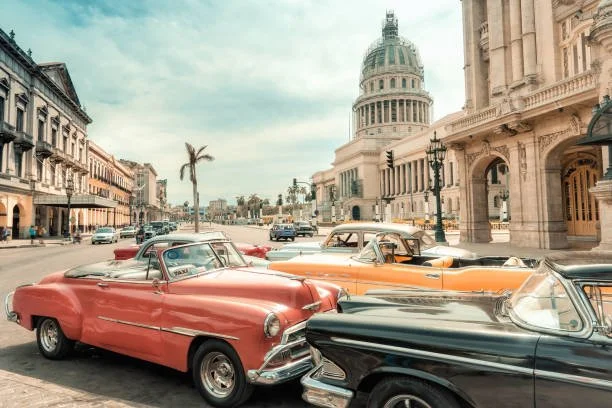
As it turns out, my father was a Bay of Pigs veteran who had spent nearly two years in Castro’s prisons. My mother, and her mother as well, had been Havana socialites. My aunt was a Catholic nun who had been forced to flee after Castro’s crackdown against the Church in retaliation for its perceived involvement in the Bay of Pigs. Neither of these two families was particularly wealthy, but if I’m being completely honest, I would say they (like Eire’s family) held a privileged position in pre-revolutionary Cuba. Both my grandfathers were doctors. My parents, seeing the writing on the wall, fled Cuba in 1959 shortly after Castro took power. I grew up hearing stories of fantastical white-sand beaches and turquoise waters. (My father grew up in a beach town, was a champion swimmer, and earned a swim scholarship to the Catholic University of America, where he studied engineering.) I also heard unbelievable tales of chauffeur-driven cars, maids, butlers, wonderful dinners and parties, and the exquisite Havana nightlife and country club scene. I heard tales of incredible pain and suffering and unimaginable loss as well, from people who had lost everything, fleeing their home island with often nothing more than the clothes on their backs and a proverbial five dollars in their pockets—unnaturally torn from family, many of whom they would never see again. My father never saw his mother or sister again. Our family lost people to the revolution as well, not to the paredón, but rather the man that would have been my godfather was one of nine Bay of Pigs Brigadistas that suffocated to death when cruelly locked into a sealed un-air conditioned trailer truck for transport to Havana.

As a young boy growing up in Houston, I must confess that I also tormented the occasional lizard and frog. I grew up with incessant warnings about the dangers of swimming too soon after eating. I set my plastic green army men ablaze and blew them to smithereens with firecrackers. I got my head stuck, not in a church pew, but in an iron rack at a Foley’s department store—maintenance had to be called. I reveled in pelting my friends with stones and BB-gun fire. And even though I have never set foot there, I have seen the occasional Cuba-shaped cloud. How can that be?
My wife of thirty-four years (as I write this) occasionally reminds me that I’m “not really Cuban.” She’s not saying this in a mean way, and she has no clue that her gentle reminder causes me some degree of angst—I don’t push back or say anything because I know there is an element of truth to what she is saying. You should also understand that my wife is a fifth- or sixth-generation Texan with family ties to the northern region of Mexico and the southern area of Texas going back to Spanish colonial times. So her bona fides as a Hispanic are undeniable, not in question like mine. No, I think maybe this subtle jab she gives me is good in the sense that it makes me confront the absurdity of my own situation. Here is an American boy sent away by privileged families and turned over to be raised by a Cuban exile family not many years removed from having lost it all and forced to restart in a new land that didn’t always welcome or want them. Here I am, stuck in the middle, with feet planted firmly in both camps but not always allowed to be fully present in either one.
I’ve never met my biological father, and it really doesn’t matter to me. Beyond a short letter he sent me once, the retired judge has shown no interest in me at all. I feel no ill will toward him. I understand.
My biological mother began reaching out and sending letters (through Catholic Charities) while I was still attending Jesuit high school in Houston. She wanted to reconnect and have a relationship. It took me a long time to respond, because I felt this wasn’t fair to my Cuban parents who raised me and were my real parents in every sense of the word. Decades after those initial letters, in my forties and with three kids of my own, I decided it was time. I realized it was selfish of me to keep a grandmother from her grandchildren—who after all had nothing to do with anything concerning my “reverse-exile.” We have had a wonderful relationship ever since, and I have gotten to know aunts, uncles, a half-brother, and even my grandmother before she died (a devout Catholic and the driving force behind the adoption; her only request was that I should be adopted by a Catholic couple). My Cuban parents, aunts, and uncles are all gone now. In fact, nearly everything from that period in my life is gone. Disappeared. Vanished. Yet I still see the occasional Cuba-shaped cloud.
I know that for Eire these Cuba clouds are haunting reminders of loss, exile, betrayal, and a longing to return to somewhere that is impossible to return to. But what of the occasional cloud that I have caught a glimpse of? Whereas Eire lost Cuba, I gained it. My memories come from stories, photos, myth, foods, music, speaking Spanish before I spoke English, and going to a multitude of (real Cuban) kids’ birthday parties. In my cloud, I see hope for the future—that maybe one day I will be able to visit or even make a pilgrimage to a free Cuba. One that has turned the corner and is arcing back toward that paradise that the eight-year-old Carlos remembers. One that is remaking itself into a crown jewel of the Caribbean. Maybe the clouds are sacramental in nature and pointing to something real beyond themselves: that our true home and identity are not in any one geographic place but lie somewhere else entirely.