Do We Recognize Grace When It Appears?
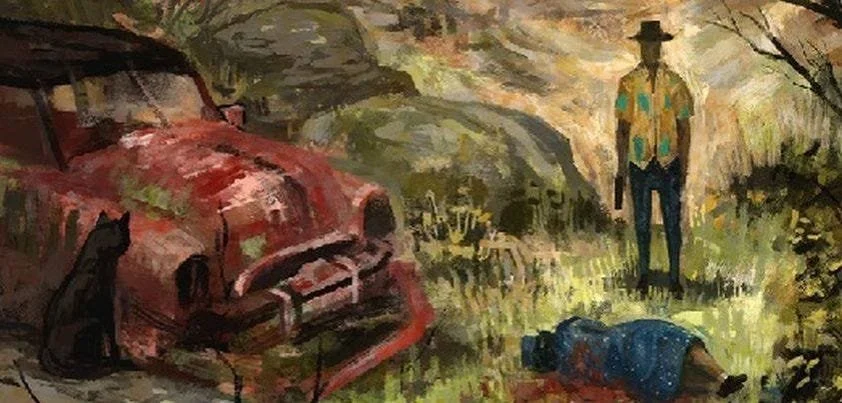
Death has a way of revealing us to ourselves. It is the great, equalizing limit to humanity. It can be a healthy motivator to reconcile or make amends. Death can also be the catalyst for one to double down on selfish, destructive decisions (you only live once, after all). Either way, remembering one’s death throughout one’s life has always profoundly affected us. This is evident in the countless ways Death has pervaded our stories from the fantastical to the mundane. For Catholic authors Flannery O’Connor and Muriel Spark, death is a moment of grace. Alas, in their works it is a moment of grace that is often ignored.
Memento Mori
This concept of remembering one’s death, the Latin phrase being memento mori, has roots that go before the dawn of Christianity. Historian Mary Beard discusses the pagan origins of this phrase in The Roman Triumph, (85), describing how victorious generals, as they passed through the streets of Rome during their victory parade, would be accompanied by a slave who would remind them of their inevitable death. This would hopefully humble them during the time when they would need humility the most.
Memento mori itself is a “seed of the Word,” as the Church Fathers understood this image to be a preparation for the Gospel in pre-Christian contexts. It is wisdom that precedes the Gospel and existed independently of Revelation. This humility certainly does not replace the need for the sanctifying grace or the theological virtues, it is necessary to till the soil for those occasions of grace. The earliest example of a Christian use of this phrase comes from Tertullian on the folly of worshiping the emperor as opposed to Christ (chapter 33). Memento mori would later be taken up, resurrected perhaps, into Christian practice during the liturgical season of Lent when Christians are reminded on Ash Wednesday that we are dust, “and to dust [we] shall return” (Gen 3:19).
Moment of Grace
One would expect the main characters of Muriel Spark’s Memento Mori (MM), geriatrics in a senior living community, to already be acquainted with the novel’s overarching, shadowy figure. However, it is their very surprise upon the recurring message each of them receives from Death, “remember you must die,” that moves the action in this short work. Every main character is plagued by continual calls on the telephone. Upon answering, they hear a voice, a different voice depending on the character, that gives the same warning, “Remember you must die.” Nothing more.
Despite this unnerving premise, and the conclusion that ever main character dies, this novel is described as “comic.” It is a “murder mystery” that is unsolved by everyone but the reader. What stands out is how every warning, and every death, in the novel leads to revelations of the characters’ pasts. These revelations often involve indiscretions in relationships.
With Spark, a Catholic convert herself, one cannot but wonder if there is some infusion of, or at least inspiration by, the Catholic concepts of the particular judgment. The second of the traditional “four last things” along with death, heaven and hell, the particular judgment involves the account of one’s life that must be rendered to God. While not formally defined as dogma, the well-established, historical teaching that, “immediately after death the eternal destiny of each separated soul is decided by the just judgment of God” has ancient, biblical roots” (Catholic Encyclopedia). One finds the clearest indication of a particular judgment when Hebrews 9:27 states, “it is appointed that human beings die once, and after this the judgment.”
This concept comes from the many references Jesus makes to judgment in the Gospels. This includes our words (Matthew 12:36–37) and our actions (Matthew 25:31-46). The combination of these indicate one’s will and one’s relationship with God. This judgement ultimately determines one’s eternal destiny.
While the Church gives little more detail on the specifics of the judgment, these principles allow for creative dramatizations. One of the common refrains of the moment of death even outside the Christian tradition is the “life-flash-before-one’s-eyes.” This, like the haunting phone calls in Spark’s MM, is another sort of “judgment” whereupon one faces all of one’s past, formative decisions with a new sense of perspective, presumably with acquired wisdom with which to retrospect. Even for those who do not believe in the Christian concept of judgment and the afterlife, death itself becomes a sort of judgment on the purposefulness of one’s life. It continually reminds one that time to find or create purpose is limited and it constantly confronts one with their place in finding or creating this purpose. In reality for the Christian, it is remembering one’s judgment that makes remembering one’s death fruitful. This is what makes even death a moment of grace.

A Moment of Grace, Rejected
Flannery O’Connor famously articulates this idea in one her most famous characters, the Misfit of "A Good Man is Hard to Find.” Briefly for those unfamiliar with the story, an outlaw and his gang have just killed an entire family while their leader holds an agonizing, existential discussion with the pious grandmother. Just after killing the grandmother, he says “She would’ve been a good woman if it had been somebody there to shoot her every minute of her life.” If she had remembered that she must die, her judgment may have gone differently.
One could apply these very words to any of the unfortunate residents of Sparks’s novel as well. If there had been a phone call warning each of them every week, instead of just the approximate week before each of them passes, they would have likely avoided entirely, or at least come-to-terms more readily, with the hidden scandals of each of their lives.
While this speaks directly to the presence of grace in our lives and our responsibility to cooperate, it actually says something indirectly yet more profoundly about God. Most of the opportunities for grace, including the many of the grandmother in “A Good Man,” or the phone calls in MM are not recognized as graces and then not cooperated with. A transformation happens, but one away from openness to God’s love and forgiveness. It is not until we are staring down the barrel of a gun that we are confronted by those missed opportunities.
For the early Christian martyrs, those of whom Tertullian speaks in his Apologeticus, death itself, even an ignoble and violent one not unlike that experienced by the grandmother in “A Good Man…,” or a mundane, forewarned one like those in MM is a moment of grace.
The question is whether we will recognize the moment in its unexpected, possibly ugly appearance, and whether we act on it.