Murder Mysteries and the Mysteries of Faith
A beautiful woman is accused of cheating on her husband by two upstanding men of the community. She protests her innocence, but has no way to prove it. Her case seems utterly hopeless until a young man steps forward, and in a shocking twist, accuses the two men of lying. He takes them aside and interviews each of them separately, ultimately discovering that their testimony does not agree. Based on this, the young man is able to assemble the entire community and prove that the woman is innocent. Instead, the two seemingly upright men had tried to seduce her, and when she refused, they falsely accused of her of cheating on her husband. The two men are duly punished, the woman is restored to her husband, and the young detective is praised for his wisdom.
Where did this story come from? Sir Arthur Conan Doyle? Agatha Christie? In fact, this story is the story of Susanna from Chapter 13 of Daniel, present only in the Greek version of the book. Some see this as one of the earliest detective stories in history.
This genre of detective fiction or murder mystery has captured the minds of Christians, since its (modern) invention by Edgar Allan Poe with his story The Murders in the Rue Morgue. Sherlock Holmes creator Sir Arthur Conan Doyle was raised Catholic and educated by Jesuits in his youth. Catholic apologist G. K. Chesterton wrote the famous Father Brown stories and was the first president of the Detection Club, a gathering of the leading detective writers of the day. A later president of that club, Dorothy L. Sayers created the character of Lord Peter Wimsey before going on to write Christian apologetics. Another member of that club was Catholic priest Monsignor Ronald Knox, who wrote the Ten Commandments of Detective Fiction. And later club president Agatha Christie was a devout Anglican who was the most famous signatory on the so-called “Agatha Christie Indult” petitioning Pope St. Paul VI to allow the Traditional Latin Mass to be celebrated in England. This is not to mention the countless Christians who devoured these mysteries. But why are Christians so drawn to a genre which has, if not always murder, a crime at its center?
It has become commonplace to distinguish the mysteries of the Catholic faith from mystery stories by saying that the mysteries of faith are not something to be solved, but rather truths to be contemplated. And while there is truth in this statement, there is a lot more in common in these two kinds of mystery than we might think.
The word “mystery” comes from the Greek word μυστήριον, which is derived from a Greek word meaning “to shut the mouth.” It has many meanings, but one of the primary definitions is something hidden or secret. In a detective story, the mystery can generally be boiled down to the question of “whodunnit,” who is the person responsible for the crime. In 2 Thessalonians 2:7, St. Paul speaks of the mysterium iniquitatis, saying “For the mystery of lawlessness is already at work.” On the one hand, he is speaking of the “man of lawlessness,” identified with the Antichrist, who will be unmasked and defeated by Christ (v. 8). On the other hand, we can say that it is not the perpetrator of the sin that is the mystery, but rather sin itself.
This strand is taken up in detective fiction in books that focus on the mechanics and motives of the crime. This subgenre is sometimes known as the “howdunnit.” Author Anthony Berkeley pushed the boundaries of the genre in his novels Malice Aforethought (published under the pen name Francis Iles) in which the murderer is revealed in the first line of the book and The Poisoned Chocolates Case in which each chapter presents a plausible but completely different solution to the same murder. Additionally, for a mystery novel to work, there have to be many potential suspects, which often means that the criminal can be anyone in the community, even those who appear to be above reproach. This points to the fact that the mysterium iniquitatis lies in the heart of each one of us. However, this mystery does not have the last word.
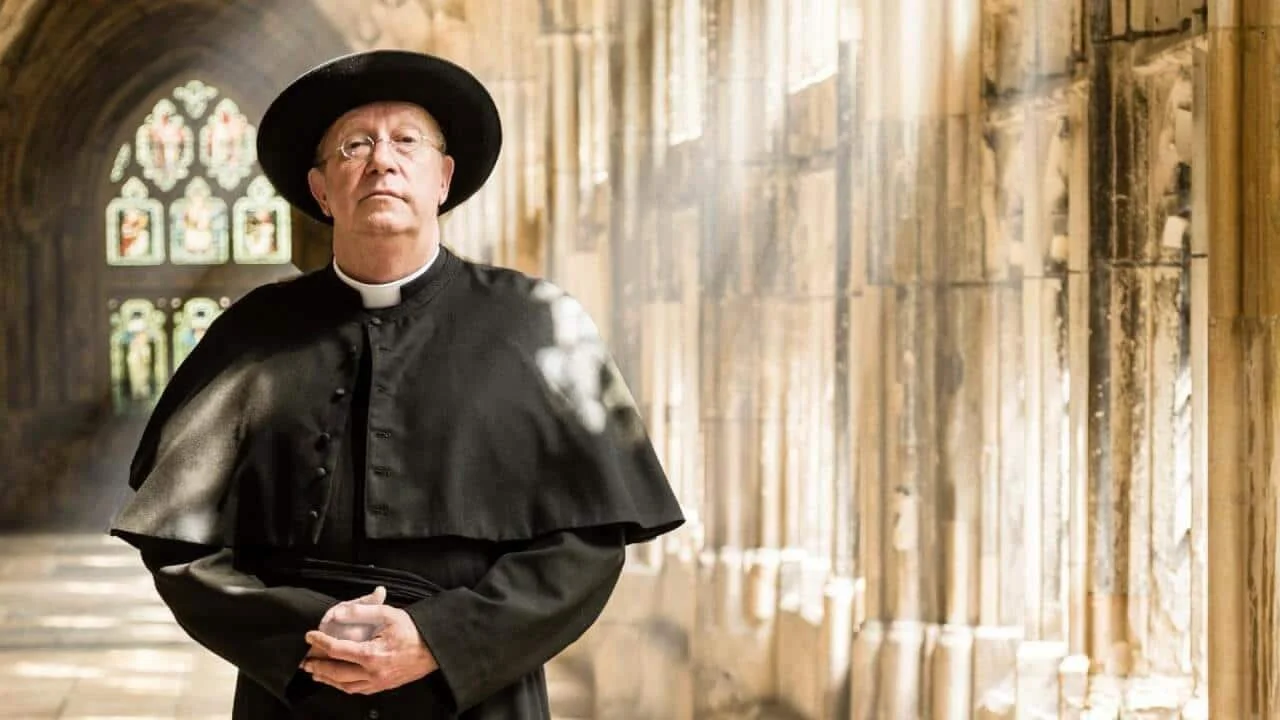
In his Apostolic Exhortation Reconciliatio et Paenitentia, Pope St. John Paul II contrasts the mysterium iniquitatis with another Pauline concept (from 1 Timothy 3:16) of the mysterium pietatis or mystery of piety: “Man's sin would be the winner and in the end destructive, God's salvific plan would remain incomplete or even totally defeated, if this mysterium pietatis were not made part of the dynamism of history in order to conquer man's sin.” This mysterium pietatis, which he identifies with Christ Himself, is what unmasks the mystery of sin for what it truly is, guaranteeing the fulfillment of God’s plan. In a detective novel, the avatar of the mysterium pietatis is the detective. This is the one person outside the realm of suspicion (and often outside the community) who enters into the chaos caused by the crime to restore order. The “outsider” nature of the sleuth is often essential to their success. We need look no further than Agatha Christie’s most famous sleuths, Hercule Poirot, a Belgian refugee and retired police officer, or Miss Jane Marple, an elderly spinster from the provincial village of St. Mary Mead.

But what are we to make of the fact that murder mysteries can be solved while we can never fully comprehend the mysteries of our faith? At the end of the typical murder mystery, we can articulate whodunnit and why they did it. But that does not necessarily exhaust the mystery. For those who revisit their favorite mystery stories, discovering who did it doesn’t matter so much as the pleasure of following the clues ingeniously laid by the author. In Gaudy Night, Dorothy L. Sayers combines the conventions of the mystery genre with the comedy of manners, weaving the personal dilemma of her heroine with the nature of the case she is investigating. For some, the pleasure of a mystery comes from trying to race the detective to solve the mystery. But for others, the pleasure lies elsewhere.
The reason we know about the mysteries of our faith is because God has revealed them to us. There is no way that we could have come to these mysteries by our human reason, and yet God has laid “clues” to them throughout history in the prophecies and types of Christ. But it is only in Christ that the mystery is fully revealed. In an analogous way, some readers enjoy waiting for that drawing room dénouement when the detective, with almost divine inspiration, reveals the mystery that has plagued us since the beginning of the book. It is no wonder, then, that some have compared this almost ritualistic pattern of detective novels to a “liturgy,” and some have even chosen to make their detectives priests.
At this point, we may not be surprised to hear that a murder mystery is at the center of our faith, namely what we call the Paschal Mystery. The Paschal Mystery is the Passion, Death, and Resurrection of Jesus. In this central mystery, the mysterium iniquitatis and the mysterium pietatis come head to head. Jesus Christ freely gives Himself up to death for our sins. However, the responsibility for this crime rests on all humanity. By His death, justice is satisfied, but not justice alone. By His death and resurrection, Jesus forgives the sins of the guilty and opens the way to eternal life with Him in Heaven. Perhaps it is against this backdrop of the Paschal Mystery that Christian mystery writers found the divine spark necessary for their fiction to become redemptive. While identifying the culprit cannot bring the murder victim back to life, the hope of the resurrection can. In the Old Covenant, Daniel reveals the innocence of a woman falsely accused, but in the New Covenant, Jesus Christ restores the innocence of the woman caught in adultery (cf. John 8:11). This is what transforms a simple puzzle story into a mystery.