
Hyperreality and the Purpose of Fiction
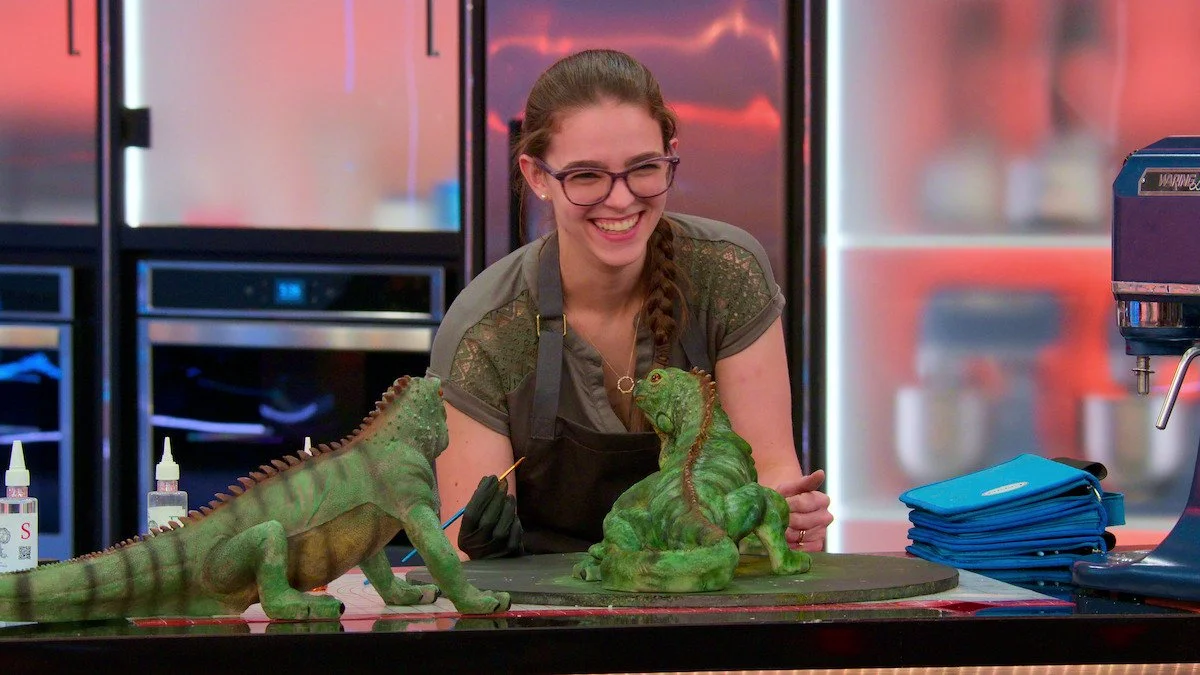
Is It Cake?
The World's Greatest Burger
Imagine eating a hamburger. This burger has been freshly ground, the buns are homemade, maybe the vegetables were grown in a backyard garden. The burger is delicious. You think, "Wow, I would love to have that burger again." But the burger can't be had again, not unless you go to the same person's house, they ground fresh beef, pick their garden, etc. And even then, backyard gardens aren't known for their consistency, and baking bread is notoriously dependent on the seasons, the humidity in the air, and more still. That burger can't be had again, and so your mind turns to other avenues. "Better yet," you think, "I'd love for a burger to be even more delicious, one that I could make for myself whenever I want." So you start experimenting. You add salt, then pepper, then other spices that compliment the burger's natural flavors. Then, you try different techniques, like dry-aging the beef, or marinading it. You experiment with cuts of beef, adding just the right amount of chuck, of ribeye, of strip. You add other meats besides. You have created a monster, but you aren't done. Eventually, you turn to more modern process. You begin deconstructing burgers at the molecular level. You wonder if lab-grown meat might not taste a little better (and be more cost-effective to boot!). You think, I could sell this burger; I could make a billion dollars. You discover ways to freeze the burger, to add chemicals that make it last for years and years so that it is more cost-effective to ship. You look for cheaper and cheaper cuts of meat, then things that aren't meat at all in any real traditional sense. You have made your first million, then billion. Your fast food company is a Fortune 500 company. You go on to repeat the same process with chicken, fish, french fries, adding these items to the menu.
What you've also done is turn a real burger, made of fresh ground chuck with homegrown vegetables and fresh-baked bread eaten in good company, into a "hyperreal" burger that can be sold to the masses. You've made a burger that's more burger than burger. People probably speculate whether it's even beef, because it simply does not taste anything like the burgers they make at home. It certainly doesn't taste anything like the burger of your initial inspiration.
An example more to the point of this essay is a strawberry Jolly Rancher. A strawberry Jolly Rancher doesn't taste like a strawberry. It's a hyperreal strawberry. It tastes both much more like a strawberry and much less like a strawberry than an actual strawberry. The flavor is artificial, it's a hard candy instead of a soft fruit, etc., but it gives a super-sensation of the flavor of strawberry, albeit, without any of the health benefits of eating actual strawberries, and actually a few health risks instead.

The point I'm trying to get to is this: this hyperreality is the experience most manufactured products in the modern world are trying to sell you. Those who produce these products want to shortcut a real, lived experience to keep the high point of the original (the sweetness of the strawberry), while also wanting to package and ship and sell it to every corner of the globe, and in so doing, remove any of the benefits of the real McCoy (the vitamins in the strawberry, for example).
Jolly Ranchers are an extreme example, but basically all of our food has taken on a hyperreal quality, now often called "ultra-processed" food, or UPF. I remember the experience as a kid of realizing that I loved ketchup but hated tomatoes, or loved peanut butter but hated peanuts. I couldn't understand why at the time, but now the clear answer is that Jif peanut butter is only tangentially related to peanuts, that Heinz ketchup is only tangentially related to tomatoes, in the exact same way that a strawberry Jolly Rancher is only tangentially related to strawberries, albeit in a slightly less extreme way. But unlike the Jolly Rancher, which we know immediately is candy and "junk food," we may not realize that peanut butter or ketchup or white bread is also junk and quite deleterious to our health, or, to go back to my original example, a fast food hamburger is much different and deleterious to our health than, say, beef from a recently slaughtered cow on a homemade bun eaten in the company of friends.
Short-Circuiting Pleasure
This short-circuiting of an experience to get the the pleasure is described in a passage from Roger Scruton's book Beauty: A Very Short Introduction, in which he says that it is exactly this short-circuiting that accounts for addiction. When we remove anything--food, sex, etc. from its proper environment and thereby shortcut our way to the pleasurable part of it--we are setting ourselves up for addiction. Think of the person who secrets away to eat the half-dozen donuts they ordered from Doordash. Rather than make donuts for a gathering of friends and family, or even bought them from the same place for that purpose, they have removed food from its proper social context to simply experience the pleasure of eating a donut.
However, this process has transfigured not only our food, but our media, the news, entertainment, fiction, poetry--everything. Look no further than education, where this "short-circuiting" takes place in the realm of knowledge, where students talk about, say, justice in Ukraine before they can even define "justice" or tell you where Ukraine or Russia are on a map. Like with eating Jif peanut butter and thinking it’s healthy when it isn’t, we have people going to school and believing they are being educated when they are not. Similarly, there are educators who want to incorporate AI into education before teaching the students what AI is, what it is capable of, what its shortcomings are, what effects it will have on the student to use AI for research instead of doing the research on their own, and so on. Even adults, watching the nightly news, know very little about current events and can simply parrot the things that they hear. They have no capacity to talk about whether it is right or wrong for a country to kill 20 soldiers and 200 civilians in a single missile strike. But they can repeat a funny tweet from a senator or a political slogan. And now, rather than think through a YouTube video we watch, we watch another YouTube video which has a second YouTuber superimposed over the first, pausing that first video to make quick, quippy remarks, often in a "shorts" format that shouldn't take up more than 30 seconds (at most) of our time, lest we get bored and move on. We have short-circuited the short circuits! This shortcutting of information leads to people feeling informed and knowledgeable while actually knowing very very little, and in the course of a lifetime, leaving a person feeling as though they are intelligent when they actually lack anything resembling wisdom, much like how eating a peanut butter sandwich on white bread might make you feel like you've properly fueled your body when in fact doing so has likely made you sick, and a lifetime of doing so will certainly lead to illness, obesity, and so on.
I won't linger on that idea here--the quintessential read on the topic of the decline of discourse with the advent of television is Neil Postman's Amusing Ourselves to Death.
The topic I really want to get to hear is something left out of Postman's book--which is ultimately about how the individual mind and the mass culture are shaped by the mediums that we engage in, namely by contrasting reading nonfiction with watching the news. A question left out of that book is, what about the comparison between reading a novel and taking in some newer form of entertainment?
The Experience of Golf
Let's take an example of tv entertainment--golf. I think sports in general constitute a lot of what people watch, and I know golf best of all these, so I'll take it as my example. So, there are many ways you could experience a golf tournament, and I'll go from most hyperreal (so, least real) to most real. These are only brief descriptions that could easily be deepened and expanded, but doing so would really burden this already too-entrenched essay.
First, you could bet on a golfer without even watching the tournament. Tracking your bet on your betting app, the tournament is a series of names and numbers, and you hope the name you chose ends up with the best number so that you can win some money.
Next level up, you could, say, watch highlights of the tournament. Now you are actually watching some golf, but it's in an incredibly disjointed way, where you are condensing a long tournament with lots of ups and downs into a quick summary of the best shots hit over the weekend, with an emphasis on the winner's best shots. It communicates very little of the tournament itself.
Next, you could watch the whole tournament on tv. You see a lot more of the ups and downs, get a general narrative sense of the torunament, and so on.
Next, you could actually go to the tournament. Suddenly, you feel the heat and the wind. You sweat and try to find shade. You walk the course. You watch players bomb drives and hear the tremendous sound of contact between clubface and ball. You mentally compare their drives to your own and appreciate just how good these guys hit it. You see amazing approaches, heartbreaking missed putts. You may get a tiny bit less of the "narrative" sense you get on tv because you can't have eyes all over the course, but that's more than made up for in just how much more immersed you are in the reality of a golf course, of weather, of the size of the hills, of the focus and time the golfers take on and around the green, and so on.
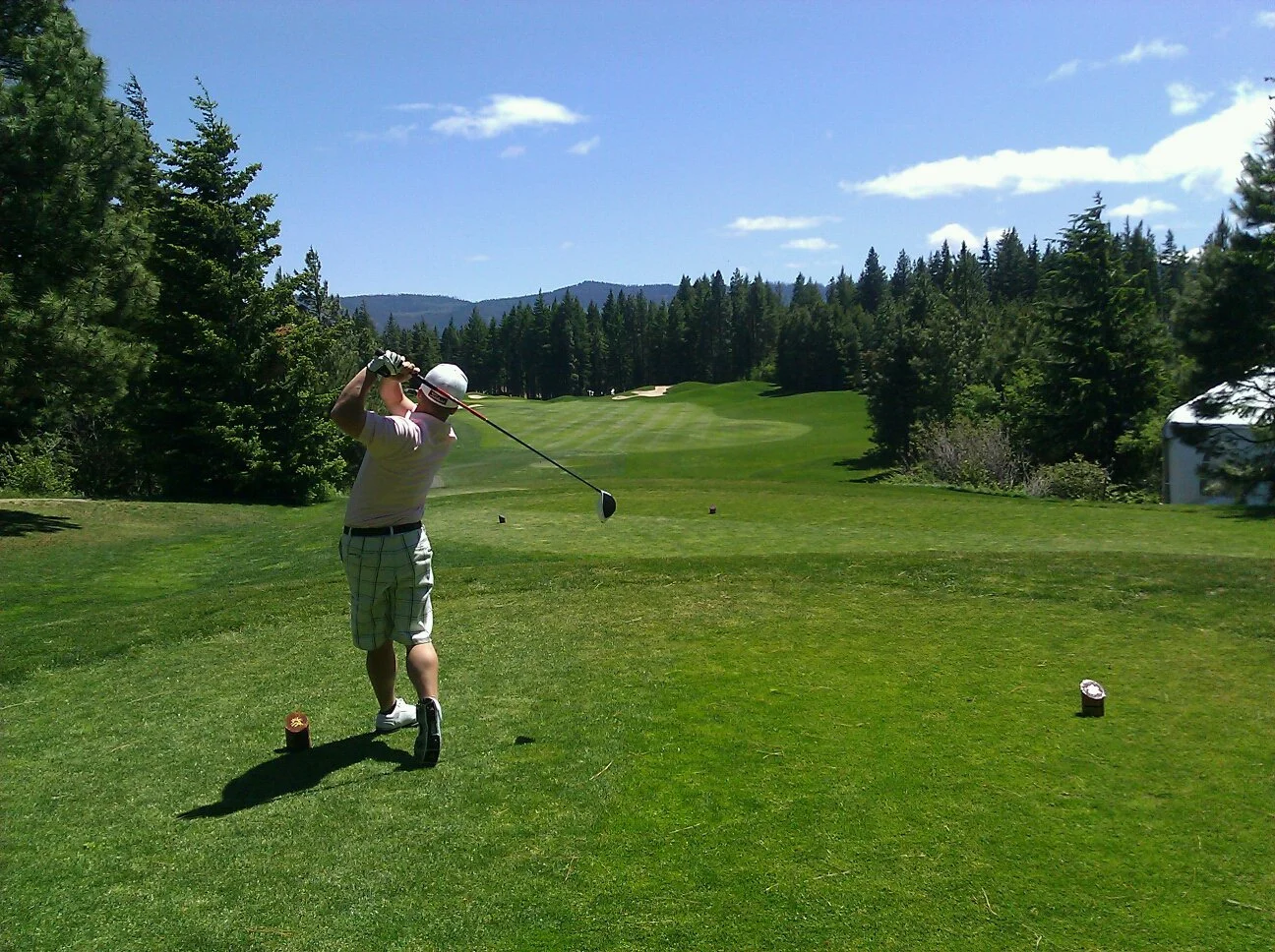
By Lilrizz - Personal Photo, CC0, https://commons.wikimedia.org/w/index.php?curid=16381754
Further, you could actually be a professional golfer, feeling all the things about being at the tournament plus the actual real, lived experience of the ups and downs of playing, of missing the cut, of getting close to a win and coming up just short, of waking up early to practice, of traveling and missing your family, of having seen your hero win this tournament as a child, of knowing that Arnold Palmer won it decades ago before you were even born, of hoping some kid like you sees you win and is inspired to play, of battling your inner demons and doubts and hopes and dreams, and more besides, even the experience of being bored between shots and zoning out, not even recalling consciously what it was you were thinking about.
Finally, if you're a religious person, you can imagine the perspective God would have on this tournament, being able to simultaneously understand as deeply as possible every person at the tournament, in the crowd, watching at home, betting on Scottie Scheffler, and all of humanity not involved directly in the tournament, and how all of that creates one great narrative.
The Purpose of Fiction
Fiction, at its best, places the reader, you, in one of these final two categories. Now story on its own gives, basically, an account of life. Every story is a story about life. Now, not all of life, even of an individual life, can be captured in a story. Even ones that try, such as Proust's famous In Search of Lost Time, which is seven volumes long and is somewhere in the ballpark of 1.2 million words. Even still, it cannot account for every moment of an entire lifetime. Proust would have to be writing every moment of his life, and would have to be accounting for each of these moments in the writing, so that the entire story would be much longer and would be about a man sitting and writing, and this itself could only account for waking moments, not sleep and dream. If every story had to account for all of life in this way, every story would be about the same thing(someone sitting and writing), would be hundreds of millions of words long, and in order to read it, a person would have to dedicate all of their own waking moments to reading it to get through a single story.
This may seem pedantic, but it gets to some truths about story. First, story has to make decisions about what to include and what to cut. Not all of life can be put in words on the page. So, the writer chooses ultimately what beats, scenes, sequences get into the story, and these decisions largely rest on the writer's own personal vision, on what character arcs, plot arcs, etc. need to be satisfied, and so on. Simply choosing what gets in and what doesn't is a huge matter of personal choice and accounts for a lot of a writer's style.
So stories can't account for all of life, but they can still account for much of it, getting close to either the first person account of life or to the third person, Godlike account of life. First, the narrative as a whole suggests an entire life. Take A Christmas Carol, which at about 30k words is significantly shorter than Proust's work (and than many of Dickens' own work), and yet, magically, seems to give us an entire life. First, we get Scrooge at a moment of great personal testing. This seems essential to a work of fiction, or even drama more broadly speaking. The character must be at their life's great choice. And what is life's great choice? It is the moment we have the opportunity to enter further into Being, the chance to become something greater than what we are, to live a fuller life, to achieve sanctity, all should that opportunity be embraced. Or, if that opportunity is rejected, resulting in a tragedy, it is the decision to live a half-life, a life of despair, to reject who we were meant to be, to choose damnation. The narrative then must all center around this monumental choice or opportunity or chance. Will King Lear choose to love his daughters and friends and thereby save his family and kingdom? Will Pierre in War and Peace learn the meaning of life or continue to squander his opportunity? Will Dorothea in Middlemarch realize her ambitions, or squander her chance at them, or recognize a deeper truth about the value of one's life? By focusing on the most critical point in one's life, the point where one can either enter into or turn away from Being, we get a character's entire life through implication, allusion, and so on, and we get a story, a kind of intense, condensed version of life (condensed only because, again, to actually tell an entire life is impossible).
First person narration puts you into a single person, giving you a full-bodied experience of what it is to be another person, to walk in their shoes and see the world through their eyes, to borrow some cliches. Third person limited is similar, only swapping out pronoun usage ("I" for "he" or "she"). Third person narration puts you into the lives of an ensemble of characters whose inner lives are laid out to the same level of first person narration, so that now, you get more a sense of the fabric of life being people whose lives intersect, who rely on each other and in fact need each other. The reason third person omniscient is greater is because of this very fact that it gets you closer to an objective, Godlike view of reality itself, though first person also gets you close and can be quite excellent. A person engaging in social media creates a hyperreal self, a version of themself with only the good parts, with the good parts being even better than they really are in person, an attractive body rather than an entire complex person. Good fiction reverses that, creating someone like a Scrooge, who at first seems quite simple and two-dimensional, but by the end of the novel is so complex that he is completely loved by the reader, who hopes against hope that this man has the capacity to change.
Franchising
Now this is a bit of a tangent, but this is part of the problem with franchising stories--franchising Tolkien, franchising Marvel, franchising Lewis. In order to franchise, you have to do the same thing to art that you have done to the burger. Or rather, you don't strictly have to, but you will, because the market demands it. People who go to see a Marvel film are paying for a product, and that product must taste the same as the previous product, just in the same way that a McDonald's hamburger better taste the same each time you order it (albeit, you understand sometimes it's a little bit hotter or fresher tasting, but still the same burger). If you franchise Star Wars, or Tolkien, you are no longer dealing with an artist making art, just like you are no longer dealing with a chef making a hamburger from scratch once you order at the drive-thru.
Similarly, any attempt at making golf, especially professional, elite-level golf anything other than the PGA Tour, as many problems as that has, simply doesn't work, because it is a product created from the top down by a team of investors who want to make money rather than by an organic process that grew over the course of decades. Golf is not great in spite of its history and strange rules and anti-entertaining atmosphere, but because of those things. Bryson DeChambeau, as much as I love him, can keep his shorts and tee boxes blasting "Mo Bamba" (because heaven forbid anyone is not entertained for even a single moment) and YouTube gimmick videos of playing golf with a shovel. People don't need to be entertained by slop--they need to encounter the real, which in golf, is the real interplay of personal physical and mental struggle, wrestling with the elements and with expectations, contemplating and appreciating history and those who came before, and setting a precedent for those who come after who recognize the deep vein of love that created golf generations ago and has fostered it ever since.
Boredom
The last point here is, basically, that you have to be a little bored. Because if you aren't bored, you are being entertained, which is a short-circuit of life to give you the pleasure and nothing else, to the point where perhaps all you will expect out of life is the pleasure, the Jolly Rancher, the highlight reel, and you may come to see life as one big ice cream sundae that's all for you to eat, and when life is inevitably not like that, you will easily and readily despair. Life is a lot more like playing a round of golf with its frustrations and elations, or a meal with family complete with conversation and bickering and arguments and laughter, or a work of art with its confounding though ultimately satisfying deep plunge into reality.